WW1 ARMY SURPLUS UNIFORMS: REPLICAS FOR COLLECTORS AND HISTORY BUFFS
Introduction: Problem—Hard to Find Real-Feel WW1 Gear
Finding a genuine WW1 uniform is a challenge for collectors and history buffs. There’s something special about holding a piece of history, but original uniforms are either expensive or fragile, and many are simply no longer available. For those who want to relive the past or display a piece of military heritage, original gear might seem out of reach.
So, what’s the solution? Army surplus uniforms, particularly WW1 replicas, have become a popular choice. They give you that authentic feel without the hefty price tag or the worry of damaging something irreplaceable. However, knowing where to buy, what to look for, and what’s historically accurate can be tricky.
What Are Army Surplus Uniforms?
Army surplus uniforms are essentially military garments, gear, and equipment that were once used by armed forces but are now available for resale. These can include anything from jackets and pants to boots and helmets, often sourced from military surplus stocks or decommissioned items.
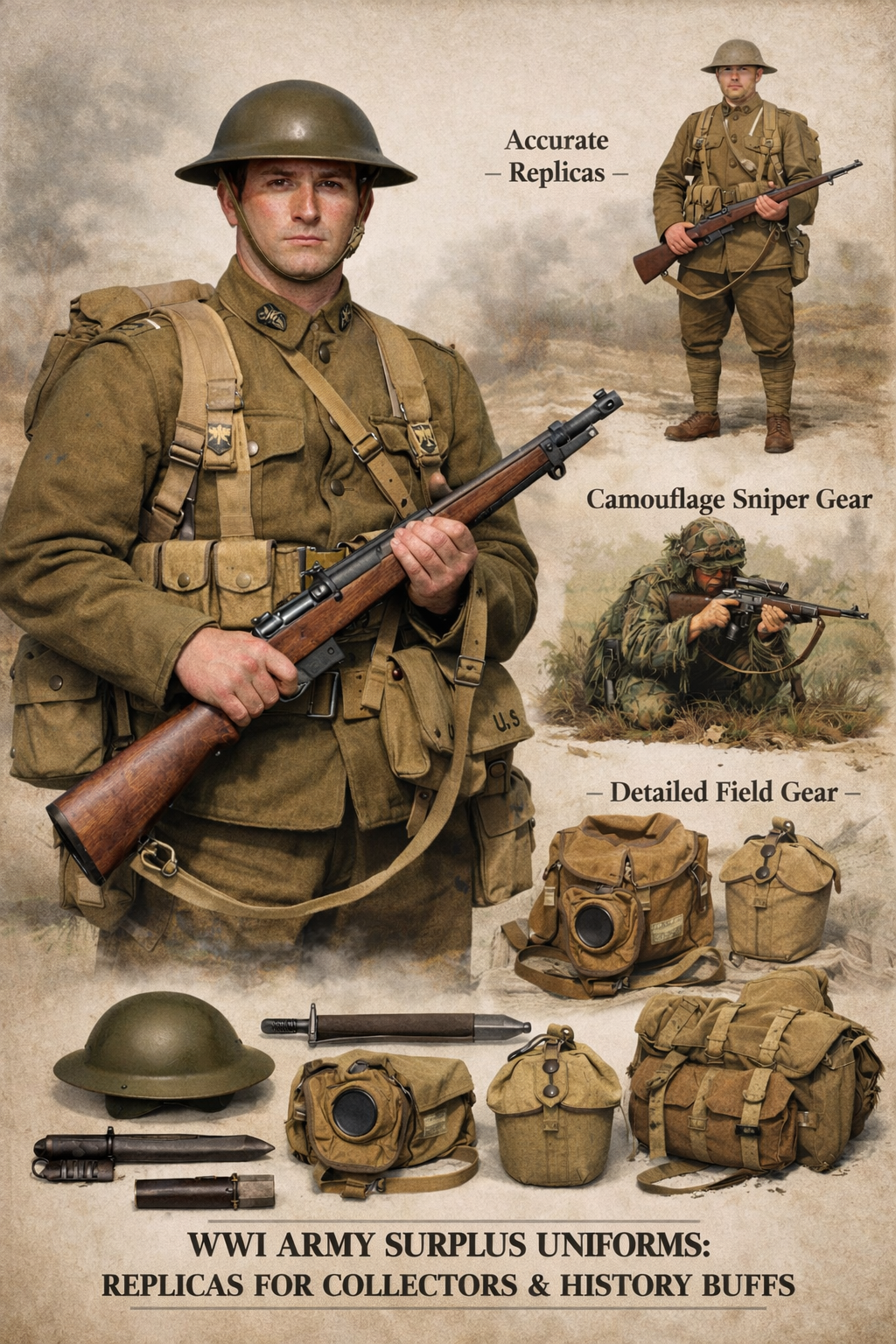
But when we talk about WW1 replicas, we're focusing on clothing and gear designed to resemble the uniforms worn by soldiers during the Great War, especially those of the US Army. These replicas are crafted to meet historical accuracy and provide an authentic experience for collectors, museums, and re-enactors. For example, the US Army produced about 4 million uniforms during WW1, making it a significant part of military history.
WW1 US Army Replica Basics
A replica isn’t just a cheap imitation. When done right, it’s a respectful nod to history. WW1 US Army uniforms are some of the most sought-after replicas for collectors. From the iconic M1912 wool tunics to the distinctive overseas caps, these pieces capture the essence of the time.
Tunic, Trouser, Cap Breakdown
Let’s take a quick look at some of the main components of a WW1 US Army uniform replica.
-
Tunic: The M1912 wool tunic was the standard for most soldiers. It was designed to be tough and functional, with a high collar and a simple design. These replicas are often made from wool blends, mimicking the original fabric for authenticity.
-
Trousers: The trousers were similarly sturdy, made from the same wool as the tunics. WW1 replicas feature the same straight-leg design and reinforced areas, like the knee patches, to make them both accurate and durable.
-
Caps: The overseas cap is one of the most recognizable items from the WW1 era. Made of wool, it has a simple yet distinct design, with a wide band and short brim.
Why Buy Historical Replicas?
If you’ve ever wondered why someone would buy a replica uniform instead of the real thing, here’s the deal:
-
Cost-Effective – Genuine WW1 uniforms are rare and expensive. Replicas, on the other hand, are affordable for collectors.
-
Durability – Replicas are made to last, often crafted with modern techniques that make them more durable than an original would be after over 100 years.
-
Accessibility – Authentic WW1 uniforms are either locked away in museums or owned by collectors who want to keep them in pristine condition. Replicas are available for anyone who’s passionate about history.
Surplus vs Originals
When you compare surplus-style replicas to original uniforms, there are clear differences, but replicas still hold up. Original WW1 uniforms have historical value, and while they might be museum-worthy, they aren’t practical for wearing or display in many cases. They’re often fragile, rare, and costly.
On the other hand, surplus-style replicas offer a chance to get a piece of the past in excellent condition and at a fraction of the cost. They’re perfect for re-enactors, collectors, or those who simply want a piece of WW1 history without breaking the bank.
Features of WW1 Replicas
Here are some key details you’ll find in high-quality WW1 uniform replicas:
-
Wool Blends: Most WW1 replicas are made from wool blends to replicate the material used during the war. Wool is durable, breathable, and keeps the historical look intact.
-
Fit Standards: These replicas are designed to fit like the originals, often using sizing standards based on the measurements from WW1. While there might be some variation depending on the maker, the goal is to stay as true to the original as possible.
-
Button Detailing: Small details, like the button design on the tunic or the leg cuffs on the trousers, are crucial. Quality replicas pay close attention to these small features, ensuring they align with what soldiers wore.
Pros & Cons of WW1 Replicas
Like any purchase, there are pros and cons when it comes to historical military replicas. Let’s take a look at the good and the not-so-good.
Pros:
-
Affordable: Replicas are far cheaper than originals.
-
Durable: Modern manufacturing techniques make them more long-lasting than vintage uniforms.
-
Accessible: Replicas are available in bulk, so you won’t struggle to find a specific size or style.
Cons:
-
Dry-Clean Only: Some replica wool garments need delicate care, like dry cleaning.
-
Not Always Perfect: Though most replicas are accurate, some might lack the fine details of an original uniform, which could be important for top-tier collectors.
"These tunics are durable enough for displays, but you have to treat them with care. Dry cleaning is a must if you don’t want to ruin the wool," says Chris, a longtime collector.
Real-World Examples
At paddelaters.com, customers regularly share their success stories when buying surplus-style replicas. One standout example is John, a passionate history enthusiast who recently built a full AEF (American Expeditionary Force) kit for a museum exhibit. He restored a worn WW1 tunic and trousers, mixing original items with high-quality replicas to recreate an accurate portrayal of a soldier’s uniform.
"The tunic and trousers from paddelaters.com were exactly what I needed. They helped me complete the display and ensure that visitors could see what soldiers actually wore during WW1," John shared.
FAQs
1. Where to buy US Army uniform replicas WW1?
You can find a wide range of high-quality WW1 US Army replicas at specialized stores like paddelaters.com. They offer authentic reproductions of tunics, trousers, caps, and more.
2. Are WW1 uniforms made from wool?
Yes, most WW1 replicas are made from wool blends to match the original fabric’s durability and appearance.
3. Can I wear a replica uniform?
Absolutely! While vintage uniforms may be fragile, replicas are designed for wear and display. Just remember to follow care instructions to keep them in good condition.
4. Do WW1 replica uniforms fit like the originals?
Replicas are made to follow the fit standards of the era, though sizes can vary. Be sure to check sizing guides or reviews before purchasing.
5. Are replicas as valuable as originals?
Replicas have value for collectors, but they aren’t as valuable as original WW1 uniforms due to their modern production. However, they are perfect for re-enactments, displays, and personal collections.
Conclusion
Finding a genuine WW1 US Army uniform is tough—whether it’s a scarcity issue or the high cost. However, army surplus uniforms and WW1 replicas offer a practical solution. They allow you to own a piece of history at a fraction of the cost, all while preserving the authenticity and feel of the original garments.
