Introduction: The Problem with Early War Uniforms
If you collect militaria, you already know this: the WW1 British soldier uniform did not start the war in good shape. In 1914, British troops marched off wearing gear designed for colonial wars, not for modern artillery, machine guns, and long trench fights. Bright buttons, stiff wool, and poor head protection caused real problems once fighting began in Europe.
This post looks at those problems, how they got worse in the first years of the war, and how the British Army fixed them step by step. We will also look at what those changes mean for collectors today. Everything here is based on real records, soldier accounts, and surviving examples, not myths or guesses.
Early Problems with British Uniforms
When war broke out, British uniforms were based on pre-war thinking. The idea was short campaigns and movement, not years in muddy trenches under shell fire.
Khaki Shift and Fabric Facts
Khaki had already replaced red coats by 1902, but early British army khaki WW1 cloth still had limits.
Key early issues included:
-
Fabric weight: Early Service Dress tunics used wool serge around 18–20 oz per square yard. This was tough but slow to dry.
-
Cut: Tight collars and narrow sleeves restricted movement.
-
Color variation: Early khaki ranged from light brown to greenish shades, making units uneven in appearance.
-
Heat and wet problems: Wool stayed wet in trenches and caused skin issues.
Reports from 1914–1915 show soldiers cutting collars, loosening cuffs, and modifying pockets in the field. These small changes tell collectors a lot today about real use versus depot storage.
Key Features of WW1 British Soldier Uniforms
As the war dragged on, the uniform became more practical. The British Army did not redesign everything at once. Instead, it made steady changes based on battlefield feedback.
Main features collectors look for include:
-
Service Dress tunic: Four pockets, brass or later dull-finish buttons, stand-and-fall collar after 1916.
-
Trousers: High waist, button fly, reinforced seat on later models.
-
Puttees: Wool leg wraps replacing leather gaiters.
-
Webbing: 1908 Pattern webbing made from woven cotton, not leather.
These features define most original World War 1 uniforms seen in collections and museums today.
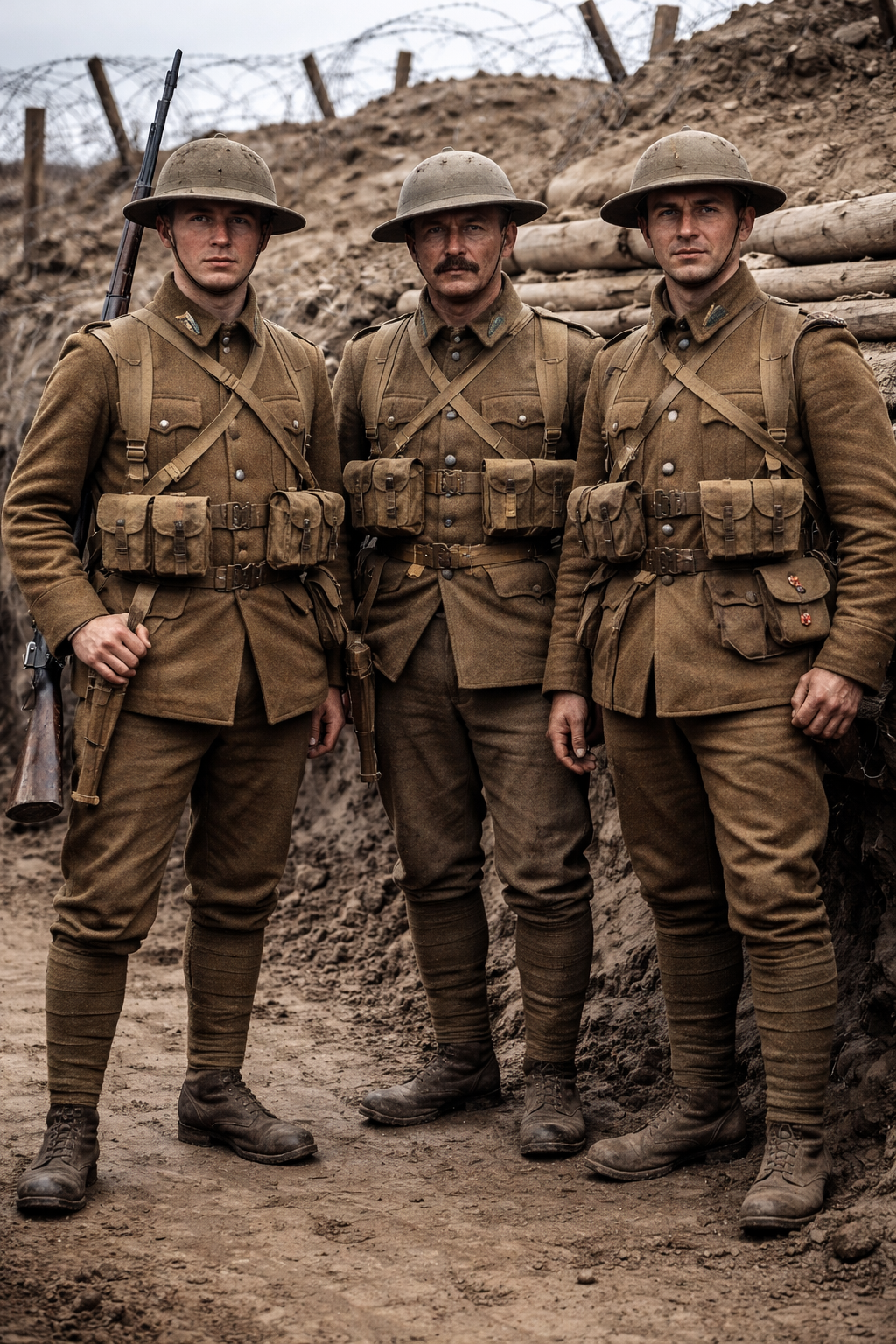
Helmet and Headgear Details
The biggest change came in 1916 with the steel helmet.
Before helmets, soldiers wore cloth caps that offered no protection. Shrapnel caused many head wounds that were not always fatal but took men out of action.
The Brodie helmet introduced:
-
Steel shell: Manganese steel, about 1 mm thick.
-
Liner: Oilcloth tube, felt pad, and leather or rubber ring.
-
Chinstrap: Early leather, later webbing.
According to records held by the Imperial War Museum, helmet use reduced serious head wounds by a noticeable margin within months of issue.
Trench-Specific Adaptations
Life in trenches forced other changes:
-
Extra buttons sewn on for gas mask bags
-
Rough stitching repairs done at the front
-
Mud staining ground deep into cloth
-
Reinforced elbows added by some units
These details often help prove real wartime use to modern buyers.
Pros and Cons from Battlefield Case Studies
Looking at soldier reports and medical records gives us a balanced view of how uniforms worked in real combat.
Pros:
-
Khaki reduced visibility compared to bright colors
-
Wool provided warmth in cold months
-
Webbing carried heavy loads better than leather
Cons:
-
Wool stayed wet and heavy
-
Lice thrived in seams and folds
-
Early headgear offered no protection
At the Somme in 1916, many casualties were linked to shell fragments hitting unprotected heads before helmets were fully issued. By late 1916, this problem had dropped, showing how uniform changes mattered.
Real-World Examples: Famous Battles and Surviving Uniforms
1. Battle of the Somme, 1916
A surviving Service Dress tunic attributed to a Somme veteran shows heavy wear:
-
Darkened khaki from repeated soaking
-
Field-repaired pocket seams
-
Name and number inked inside
This tunic matches written accounts describing weeks without dry clothing during the offensive.
2. Ypres Salient, 1915–1917
Uniforms from Ypres often show gas exposure signs:
-
Stiffened cloth from chemical residue
-
Added hooks for gas mask satchels
-
Helmet liners replaced due to contamination
Collectors value these examples for their clear link to chemical warfare adaptation.
3. Gallipoli Campaign, 1915
Hot weather exposed another flaw. Soldiers modified uniforms by cutting sleeves short and removing lining. A lightened tunic sold at a Bonhams militaria sale in 2019 showed these changes and reached a higher price due to clear campaign history.
4. Home Front Training Uniforms
Training uniforms kept in Britain often survive in better shape. A near-mint 1914 tunic with depot stamps but no field wear is less rare than a battle-used example, but still valued for condition.
FAQs
How can I tell if a WW1 British soldier uniform is original?
Check stitching, fabric weave, buttons, and wear patterns. Originals usually show uneven fading and hand repairs.
What is the average value of an original WW1 British uniform?
Prices range widely. Common tunics may start around $800, while named or battle-linked sets can exceed $5,000.
Are reproductions easy to spot?
Good reproductions exist, but modern thread, machine stitching, and wrong fabric weight are clues.
Does a Brodie helmet add value?
Yes. A helmet with original liner and matching wear can double the value of a uniform grouping.
How should I store a WW1 uniform?
Store flat, away from light, with acid-free tissue. Avoid hanging heavy wool.
Is moth damage a deal breaker?
Minor damage is common. Heavy damage lowers value but does not always ruin historical interest.
Are uniforms with medals worth more?
Complete groups with medals and paperwork are more desirable and easier to research.
Conclusion: Why These Uniforms Still Matter to Collectors
The story of the WW1 British soldier uniform is a story of learning the hard way. Early designs failed under modern war pressure. Step by step, the British Army fixed those failures with better fabric use, steel helmets, and practical field changes.
For collectors, this makes World War 1 uniforms more than just clothing. Each stain, repair, and change reflects real decisions made under fire. Whether you collect battle-worn pieces or clean training examples, knowing these details helps you buy smarter and spot real history.
If you are actively looking for original items, check current listings and research notes at https://paddelaters.com/uniforms to compare features and prices. The more you understand how these uniforms worked in war, the better collector you become.
