BRITISH WW2 UNIFORMS: FROM BATTLEFIELDS TO COLLECTIBLES
Introduction: The Challenges of British WW2 Uniforms
Imagine being a British soldier during World War II. You're in the trenches, or maybe in the heat of the North African desert. You've got your rifle, but what about your uniform? Is it warm enough for the cold European nights, yet breathable enough for the blistering sun? Can it withstand the wear and tear of battle?
The uniforms British soldiers wore during WW2 were more than just clothing; they were vital to survival. But it wasn't all smooth sailing. There were challenges, both on the battlefield and at home, in getting these uniforms right. Let's explore the history of British WW2 uniforms, the impact they had on the troops, and what collectors need to know today.
Why British WW2 Uniforms Mattered
In the heat of battle, soldiers don’t have time to worry about their clothes—unless something goes wrong. A uniform that doesn’t fit right or isn’t made from durable material can mean the difference between life and death. In WW2, British soldiers faced extreme conditions, and their uniforms had to adapt quickly to those changing circumstances.
The British army, like many others during the war, started with traditional wool-based uniforms. But by the time the war escalated, these uniforms had to evolve to meet the needs of modern warfare. The Battle Dress, introduced in 1939, was one of the major innovations in this field.
Before this, British soldiers wore the "tunic and trousers" combination, which, while classic, wasn’t ideal for the demands of WW2 combat. The wool serge material was heavy, hard to dry, and not suited for long-term wear under grueling conditions.
Key Features Breakdown: Materials, Cuts, and Insignia
So, what exactly went into British WW2 uniforms? Here’s a closer look at the most common features of the iconic Battle Dress and other uniforms from that era.
1. Battle Dress (BD) Uniform
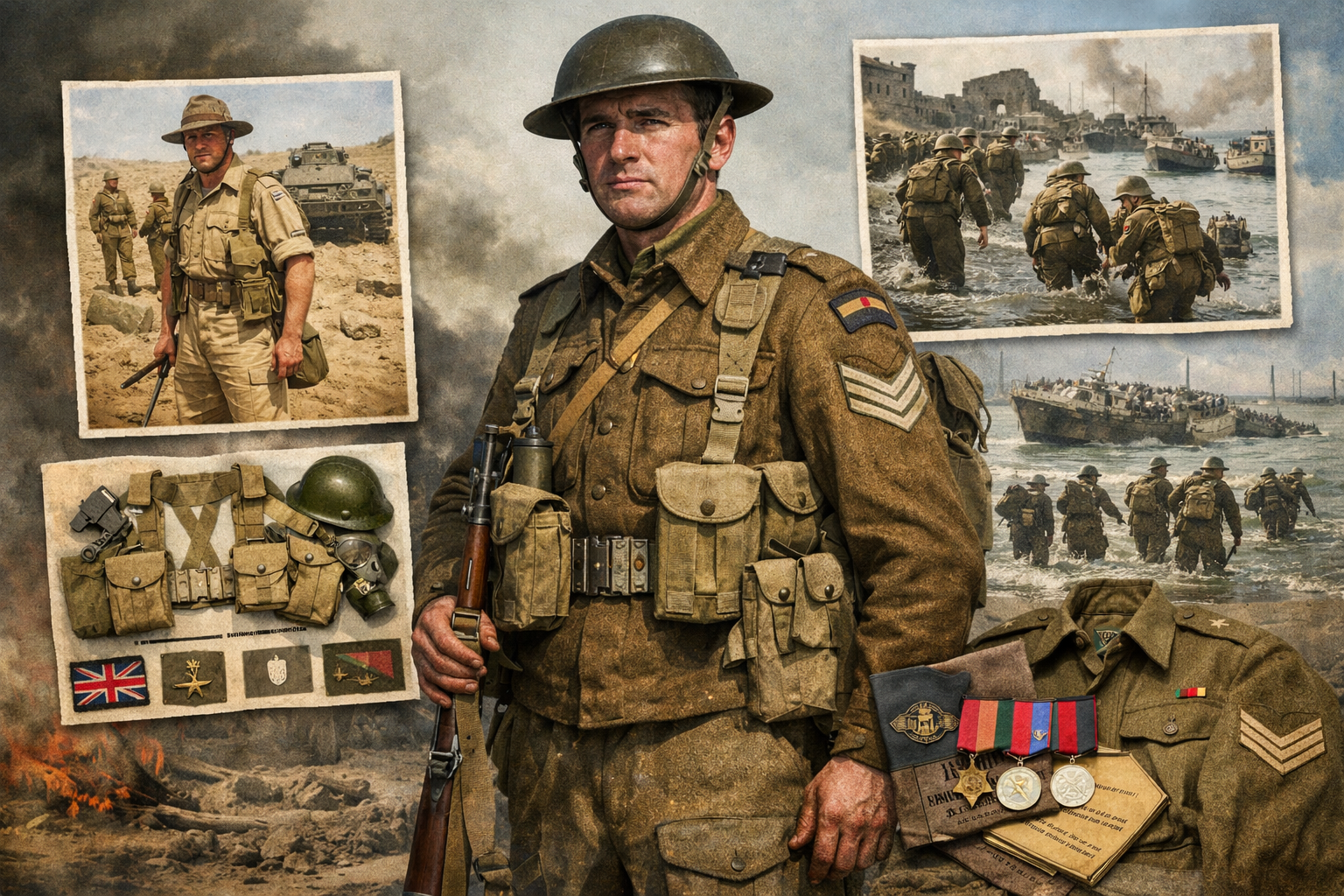
Introduced in 1939, the Battle Dress was a revolutionary departure from previous uniforms. It was designed for practicality—loose-fitting and comfortable for movement. Here are its key features:
-
Material: Primarily made of wool serge, which provided warmth, durability, and ease of maintenance. However, wool could be uncomfortable in the heat, leading to later modifications.
-
Cut: The Battle Dress had a blouse-style jacket with a short, boxy cut to aid ease of movement. The trousers were designed to be tucked into the boots to prevent dirt and sand from getting inside.
-
Pockets: The uniform included large pockets on the blouse for carrying personal items or small tools.
-
Insignia: Each soldier wore rank badges and regiment insignia on their shoulders and sleeves. These were either embroidered or made from metal, depending on the rank.
2. Webbing and Accessories
The 37 Pattern webbing was another critical part of the British WW2 soldier's uniform. It featured:
-
Equipment: Pouches for ammunition, water bottles, and other essentials.
-
Material: Made from khaki cotton webbing, it was durable and lightweight.
-
Adaptations: Over the course of the war, modifications were made to make the webbing more comfortable and adaptable to the changing needs of soldiers.
3. Other Uniforms and Gear
-
Feldmütze (Hat): The British military hat, often referred to as the "Brodrick Cap," was worn during the early part of the war. Later, a more practical helmet, like the iconic “tin hat” or Mk II helmet, became standard.
-
Footwear: Sturdy leather boots were crucial for long marches and trench warfare.
Pros and Cons: Durability vs. Weather Issues
With the introduction of the Battle Dress, British soldiers saw significant improvements in their uniforms’ practicality. However, there were still pros and cons that impacted troops in various theaters of war.
Pros of British WW2 Uniforms
-
Durability: The wool serge used in Battle Dress uniforms was tough and long-lasting. Soldiers didn’t have to worry much about their uniforms falling apart during battle.
-
Comfort and Mobility: The uniform was designed to be looser and easier to move in, especially compared to older styles.
-
Standardization: The mass production of uniforms allowed for quick supply and easy distribution across British forces.
Cons of British WW2 Uniforms
-
Weather Issues: While wool was great for cold climates, it could be a nightmare in hot, humid environments like North Africa. The heavy material wasn’t very breathable.
-
Chafing and Fit: The early Battle Dress trousers and jackets didn’t always fit perfectly, leading to discomfort and chafing.
-
Limited Adaptation for Specialists: Not every British soldier had a uniform suited to their specific role. Tank crews, for example, often struggled with the standard issue, which wasn’t ideal for cramped, hot conditions inside a tank.
Production Numbers: How Many Were Made?
To meet the overwhelming demand, British factories produced over 13 million Battle Dress uniforms alone by the end of the war. These were distributed not only to the British army but also to the Commonwealth forces, including Australia, Canada, and India.
Real-World Examples: The Impact of British WW2 Uniforms in Battle
Let’s take a look at how British uniforms held up in some of the most pivotal battles of WW2.
1. The Dunkirk Evacuations (1940)
During the evacuation at Dunkirk, British soldiers had to make a hasty retreat, often wading through water and trudging across muddy terrain. The wool Battle Dress served its purpose well, providing warmth and durability in the cold and damp conditions. However, soldiers quickly realized the heavy material wasn’t ideal for the intense heat of battle.
2. The North African Campaign (1940-1943)
The heat of the North African desert presented a major challenge for British soldiers. The Battle Dress, designed for colder climates, was too heavy for the scorching sun. To solve this, the British army introduced a lighter, cotton-based version of the Battle Dress, which helped improve comfort. In addition, the shorts and shirt combination became more common in this theater of operations.
3. The Italian Campaign (1943-1945)
In Italy, the British soldiers adapted their uniforms to the diverse conditions they faced, from rain-soaked hills to dry, rocky terrains. The webbing equipment proved vital, holding ammunition and water bottles while also being lightweight enough to carry for long distances.
FAQs: Common Questions About British WW2 Uniforms
1. How can I spot an authentic British WW2 uniform?
Look for original labels, material types like wool serge, and matching insignia. Authentic uniforms will show wear from usage—this includes faded colors and stitching that’s been made by hand.
2. How many different versions of the Battle Dress were there?
There were several versions, with updates made in the 1940s. The earliest version had a single-breasted blouse, but by 1944, a zipper version was introduced.
3. Were British tank crew uniforms different from standard uniforms?
Yes, British tank crews wore specialized uniforms, often featuring a jumpsuit style with added padding to protect against burns and chafing.
4. What is the most sought-after British WW2 uniform for collectors?
The Battle Dress with original insignia, especially if it’s tied to a particular regiment or battle, is highly prized by collectors.
5. How do I care for my WW2 uniform collection?
Keep uniforms in a cool, dry place and away from direct sunlight. Consider using acid-free boxes or garment bags to avoid deterioration.
6. Were there any notable differences between British and American WW2 uniforms?
Yes, the cut, material, and specific accessories like webbing were different. The British preferred wool, while the American uniforms often featured lighter, more breathable fabrics for different climates.
Conclusion: Key Takeaways for Collectors and Resellers
British WW2 uniforms were more than just clothing; they were a testament to the ingenuity and resilience of the troops who wore them. From the rugged Battle Dress to the iconic webbing, these uniforms evolved to meet the harsh demands of the battlefield. For collectors today, these pieces of history are not just relics—they are stories frozen in time.
If you're a collector or reseller, look out for authentic materials, specific regimental insignia, and any historical documentation that can add value. Whether you’re looking to own a piece of history or share it with others, British WW2 uniforms are both fascinating and important to preserve.
