FRENCH WW1 UNIFORMS: THE TRANSITION FROM RED TROUSERS TO HORIZON BLUE
The Problem with Early French WW1 Uniforms
When World War I began, the French military relied on uniforms that were suitable for parades but not for the brutal realities of trench warfare. The French Poilus (soldiers) were sent into battle wearing uniforms designed for earlier times, leading to major issues on the battlefield.
1914 Red Trousers Disaster
One of the most infamous uniform failures was the red trousers worn by French soldiers at the start of the war. In 1914, the French army still used bright red trousers as part of its uniform. While they were part of the traditional military dress and symbolized the prestige of the French army, they were disastrous for combat.
Red trousers were easy to spot from a distance, making soldiers prime targets for enemy snipers. In the early days of WW1, this brightly colored attire made French soldiers highly visible against the dull, muddy landscapes of the Western Front. The result was devastating: the soldiers, already facing the horrors of modern warfare, became even more vulnerable.
By 1915, the French realized the need for a new uniform that could offer protection in combat without compromising their safety. The red trousers were phased out, and a more practical uniform was developed.
Trench Agony and Uniform Failures
The trenches of World War I were grim places. Not only did soldiers have to contend with enemy fire, but also the harsh environmental conditions that tested their uniforms' durability and practicality. French soldiers had to endure these struggles day after day.
Combat Uniform WWI Shortcomings
The early French WW1 uniforms were not well-suited for the constant fighting and living conditions in the trenches. Here’s why they were ineffective:
-
Heavy Wool Fabric: The uniforms were made of heavy wool, which became wet and uncomfortable in the trenches. This caused a lot of discomfort, especially during the rainy, muddy conditions.
-
Lack of Protection: The early uniforms did little to protect soldiers from shrapnel or bullets. The equipment, including the kepi (a soft hat) and wool trousers, was not designed for the kind of protection needed in the trenches.
-
Poor Fit: The initial uniforms were tailored to fit soldiers in a very formal way, which didn’t work well in the rugged, tight, and dirty conditions of trench warfare. Soldiers often needed more practical, adjustable gear.
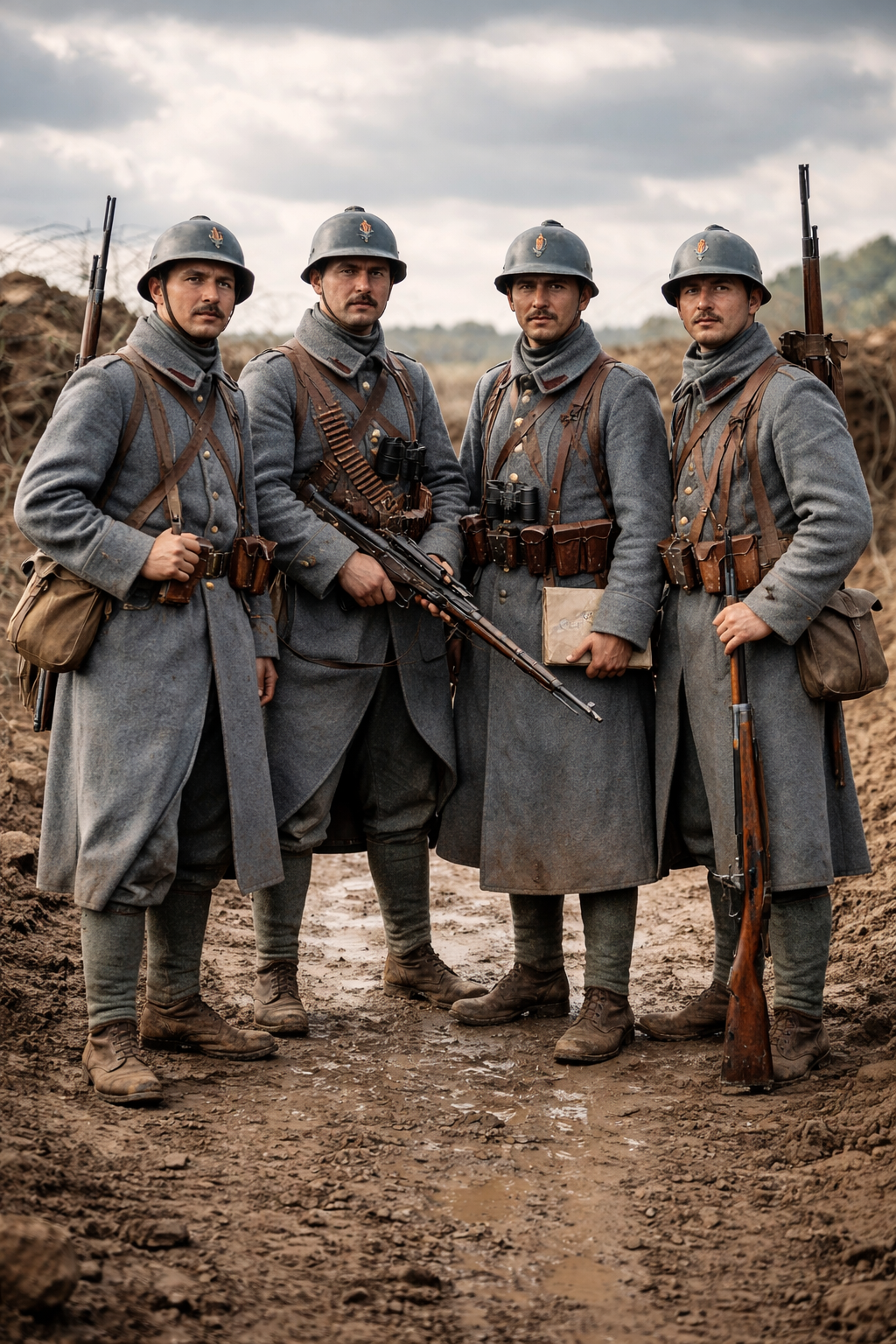
These shortcomings were quickly noticed, and changes were made to improve the soldiers' safety and comfort.
The Solution – Horizon Blue Revolution
By 1915, the French military leadership had recognized the need to change the uniform design to meet the specific challenges of trench warfare. The result was the adoption of the horizon-blue uniform, which would become one of the most iconic military uniforms of the war.
French WW1 Officer Uniform Upgrades
The new horizon-blue uniform was designed with several key improvements to address the issues with the earlier uniform. The officers, as well as regular soldiers, were provided with more practical and less conspicuous gear.
Key changes included:
-
Horizon Blue Color: The uniform was dyed in a muted blue-gray color, which was better suited to the battlefield and offered some camouflage in the trenches.
-
Durability: The uniform was made from a more durable fabric, designed to withstand the harsh conditions of trench warfare.
-
Design Changes: The uniform featured a more modern cut, with practical elements like a shorter tunic and better-fitting trousers.
Key Features of M1915 Uniform
The M1915 uniform, which was a direct successor to the 1914 uniforms, had several key features that set it apart from its predecessors:
-
Tunic: A fitted, short tunic that allowed for more freedom of movement.
-
Trousers: Replacing the red trousers, the new trousers were of the horizon-blue color and more practical for trench life.
-
Adrian Helmet: One of the most significant changes was the introduction of the Adrian helmet in 1916. This steel helmet provided much-needed head protection against shrapnel, a constant danger in trench warfare.
Pros & Cons of French Combat Uniform WWI
As with any uniform, the French WW1 combat uniform had its strengths and weaknesses. Let’s take a closer look.
| Pros | Cons |
|---|---|
| Camouflage-like horizon-blue color | The initial wool fabric was not ideal for wet conditions |
| Better protection with the introduction of the Adrian helmet | Early versions of the uniform were uncomfortable in trench conditions |
| Functional design for easier movement | The uniform’s durability could still be an issue in extreme conditions |
| More practical design for soldiers in combat | The uniform still lacked adequate protection from some types of weapons |
Real-World Example – Verdun 1916 Case Study
One of the most brutal battles of WW1 was the Battle of Verdun in 1916, where French soldiers, wearing their new horizon-blue uniforms, endured horrific conditions. The French Poilus at Verdun had to face constant artillery bombardment, machine gun fire, and gas attacks. The battle lasted for nearly 10 months, and it became one of the longest and deadliest engagements of the war.
The French soldiers’ new uniforms played a critical role in this battle, offering better camouflage than the previous red trousers. However, the conditions were still harsh. The mud, rain, and cold temperatures made life in the trenches unbearable. Despite the improvements in uniform design, the soldiers’ gear still couldn’t fully protect them from the dangers they faced every day. Yet, the introduction of the horizon-blue uniform, along with the iconic Adrian helmet, did provide some level of protection and allowed French soldiers to hold the line.
FAQs
1. Why did the French army change its uniform during WW1?
The French army changed its uniform due to the failure of the bright red trousers, which made soldiers easy targets. The new horizon-blue uniform was designed for better camouflage and practicality in the trenches.
2. What was the Adrian helmet, and when was it introduced?
The Adrian helmet was a steel helmet introduced in 1916 to protect soldiers from shrapnel and head injuries. It was a significant upgrade in protection for French soldiers.
3. How did the M1915 uniform differ from the previous one?
The M1915 uniform replaced the red trousers with a more practical horizon-blue color, was made from durable fabric, and included more functional features suited to trench warfare.
4. Are there replicas of the French WW1 uniform available today?
Yes, modern replicas of the French WW1 uniform, including the M1915 and the Adrian helmet, are available from various collectors and reenactment suppliers, such as paddelaters.com.
5. What role did the horizon-blue uniform play in the Battle of Verdun?
The horizon-blue uniform offered better camouflage and comfort for French soldiers during the grueling Battle of Verdun. Though it couldn’t fully protect them, it was an improvement over the previous uniform.
Conclusion
The evolution of the French WW1 uniform from the red trousers to the iconic horizon-blue design was a necessary response to the changing nature of warfare. While the early uniforms failed to protect soldiers in combat, the M1915 uniform and Adrian helmet marked a significant improvement. The battle-tested soldiers at Verdun 1916 wore these upgraded uniforms, which offered some relief but couldn't eliminate the harsh realities of trench warfare. Today, collectors and reenactors can experience the history of these uniforms through high-quality replicas, such as those available at paddelaters.com.
