FRENCH WWI UNIFORMS AND EQUIPMENT: A TALE OF STRUGGLE AND INNOVATION
Introduction: The Struggles of the French Soldier in WWI
In the early days of World War I, the French soldier faced a unique set of challenges, many of which stemmed from their uniforms and equipment. Imagine yourself in 1914, standing on the muddy, blood-soaked fields of the Marne, with poorly-fitting clothing and gear that had not yet evolved to meet the harsh realities of modern warfare. This was the reality for French soldiers at the start of the war. And while they eventually adapted and overcame these early obstacles, their initial experiences highlighted significant flaws in their uniforms and equipment.
In this post, we’ll explore the problems French soldiers faced early in WWI, how these issues were addressed, and the solutions that came about through innovation and necessity. We’ll also take a brief look at how French military gear evolved by the time of World War II, comparing the two to highlight the changes in design, functionality, and effectiveness.
Early Problems with French WWI Gear (PAS Problem)
When the French Army mobilized for war in 1914, soldiers were equipped with a uniform and gear that were, at best, outdated and, at worst, ill-suited for the brutal conditions of trench warfare. The French military’s focus on tradition and their reliance on older models led to significant issues for their soldiers. Here are some of the biggest problems faced by French soldiers in the early stages of the war:
-
Horizon Blue Uniforms: Introduced in 1914, the iconic "horizon blue" uniform was intended to offer some camouflage. However, its bright blue color made soldiers highly visible against the earth tones of the battlefield. This was a glaring disadvantage, especially as machine guns and long-range rifles became deadlier.
-
No Protective Helmets: Unlike the German Army, which introduced the Stahlhelm early in the war, the French initially went without protective headgear. Soldiers were exposed to shell fragments and shrapnel, resulting in severe injuries and high casualties.
-
Inadequate Footwear and Clothing: French uniforms featured poorly-fitting jackets and trousers that were uncomfortable in the trenches, where movement was restricted. Soldiers also suffered from trench foot due to inadequate boots, which led to high rates of infection and injury.
What Made Things Worse (PAS Agitate)
The problems with French uniforms weren’t just theoretical—they had real consequences on the battlefield. During the early battles of WWI, such as the Battle of the Marne (1914), French soldiers were at a severe disadvantage due to the inadequate protection and functionality of their gear. Let’s break down the harsh conditions:
-
Increased Visibility: The bright horizon blue made soldiers easy targets. A soldier in a bright blue uniform was a sitting duck, especially during long-range engagements. French commanders quickly realized this, and the uniforms would later be modified, but not before too many men had already fallen.
-
Casualties from Head Injuries: Without helmets, soldiers were vulnerable to the constant barrage of artillery fire and shrapnel. The first significant casualty reports for the French Army in WWI were for head injuries, a tragedy that could have been avoided with the right protective headgear.
-
Logistical Strain: With poorly designed clothing and footwear, soldiers struggled to maintain mobility and morale. Injuries from ill-fitting gear, combined with the physical toll of trench warfare, put extra strain on the French military. Soldiers found themselves exhausted and incapable of maintaining the pace needed for prolonged combat.
These early failures served as a wake-up call for the French Army, pushing them to reconsider their entire approach to soldier outfitting.
Key Features of French WWI Uniforms and Equipment (PAS Solution)
After facing harsh conditions and witnessing their soldiers suffer unnecessarily, the French military began to adapt. Several key changes were made in their uniforms and equipment, many of which directly addressed the issues identified in the early battles. Let’s take a closer look at the major innovations:
-
Horizon Blue Uniform Modifications: By 1915, the French realized that the horizon blue uniforms were not suited for the harsh reality of warfare. They began to replace the bright blue with more practical and muted colors, like khaki and a darker blue. By 1916, trench warfare had shown that effective camouflage was paramount, and these changes made a significant difference in visibility.
-
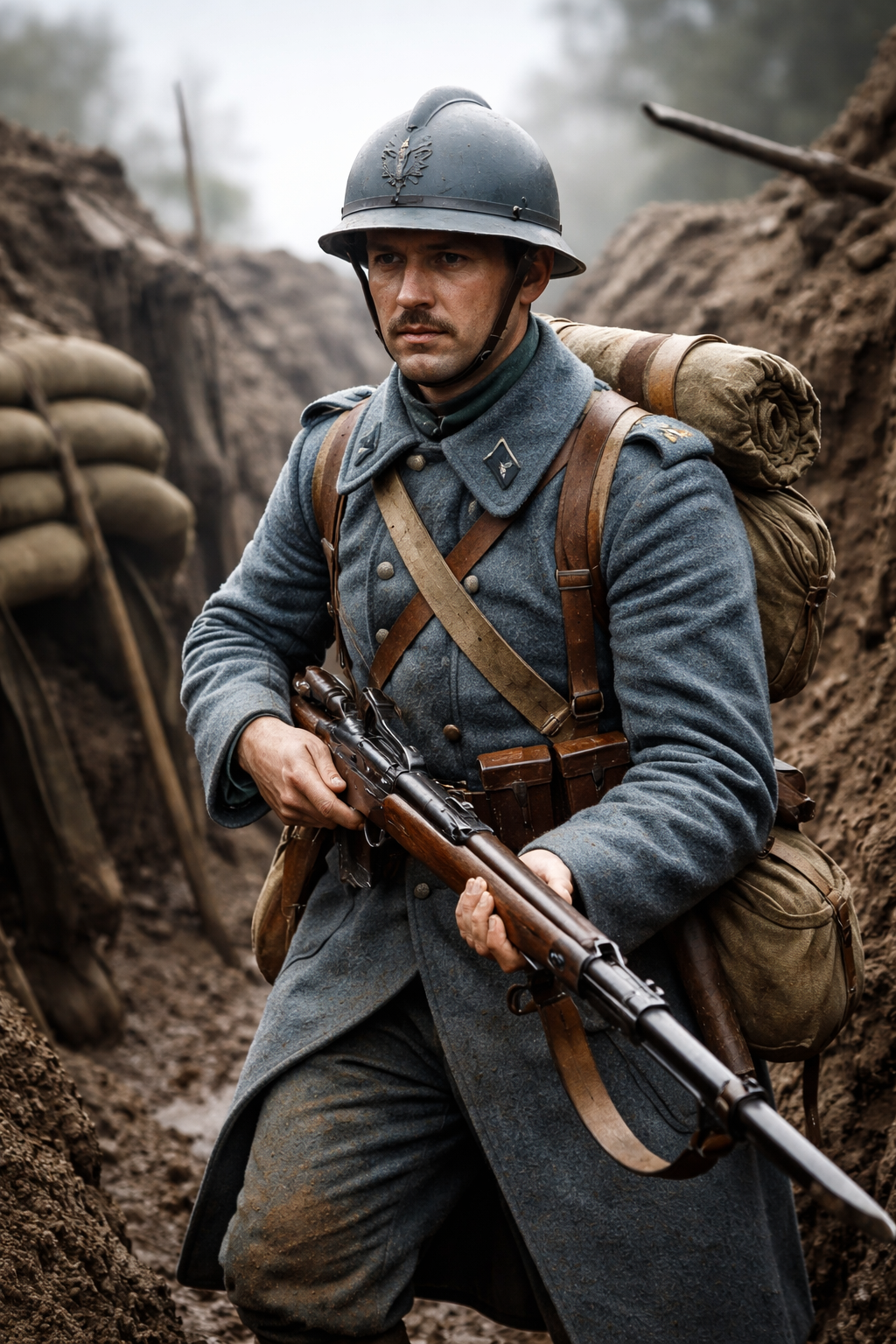
The Adrian Helmet (1915): One of the most important changes came in the form of the Adrian helmet. Designed by the French Army’s Chief of Staff, the helmet was made from steel and offered protection against shrapnel and debris. It weighed around 1.2 kg (2.6 lbs) and covered the skull and neck, making it an improvement over the earlier use of soft caps. The Adrian helmet became a symbol of French resilience in the war.
-
Better Footwear and Clothing: By 1916, the French military had improved its soldiers' boots and clothing. The soldiers’ new boots were designed to withstand the harsh conditions of trench warfare, helping to reduce the incidence of trench foot. Additionally, their coats and jackets were now designed to allow for greater mobility and comfort.
Horizon Blue Uniform Details
The horizon blue uniform was one of the most iconic aspects of the French Army’s World War I appearance. But as we’ve discussed, it was far from perfect.
-
Fabric: The uniform was made from wool, designed to keep soldiers warm in colder months but proved uncomfortable in the damp, muddy conditions of the trenches.
-
Jacket: The French “Greatcoat” was a heavy woolen coat, which proved cumbersome in the field. Its cut was also not conducive to the rapid movements needed in combat situations.
-
Trousers: The bright blue trousers were often too tight for comfortable movement and would be eventually replaced with less conspicuous, more functional designs.
Helmets, Rifles, and Gear Specs
Let’s go over some of the key pieces of French WWI equipment:
-
Adrian Helmet (1915): As mentioned earlier, the Adrian helmet was a game-changer. Its steel construction protected soldiers’ heads from shrapnel. It had a distinctive crest on the top, designed to distinguish French soldiers from others.
-
Rifle: The standard issue rifle was the Le Fusil Lebel Modele 1886, which was notable for being one of the first bolt-action rifles to use smokeless powder. However, its design was bulky, and it had a slow rate of fire compared to later weapons.
-
Bayonet: The Lebels bayonet was long, with a distinctive "sword" style that could be used for close combat.
Pros and Cons (WWI vs. WWII French Uniforms)
When comparing French uniforms between the two world wars, several differences stand out. While the French military was slow to adapt in WWI, by WWII, they had made significant improvements.
Pros (WWI):
-
Adrian Helmet was much better protection than the soft cap of 1914.
-
Practical gear upgrades such as better boots and jackets in 1916 helped with mobility.
Cons (WWI):
-
Visibility of Horizon Blue was a major disadvantage early on.
-
Heavy, cumbersome clothing made it harder for soldiers to move quickly.
WWII:
-
Helmets improved, and the French introduced the M1935 helmet, which was lighter and more comfortable.
-
Camouflage uniforms were also adopted, making soldiers harder to see.
Real-World Examples from Battles
-
Battle of the Marne (1914): Early French uniforms led to high casualties due to the bright horizon blue making them visible targets.
-
Verdun (1916): By this time, uniforms had evolved. The French had switched to more practical clothing and the Adrian helmet, improving protection in the trenches.
-
Somme (1916): The evolution of gear continued, and the French Army's improvements showed in the battlefield's high-stakes combat.
FAQs
1. How much did a WWI French helmet weigh?
The Adrian helmet weighed approximately 1.2 kg (2.6 lbs).
2. Why was the horizon blue color problematic?
The bright blue was easily visible in the trenches, making French soldiers prime targets for enemy fire.
3. What was the standard rifle used by the French?
The Le Fusil Lebel Modele 1886 was the standard-issue rifle.
4. How did the Adrian helmet help in combat?
The helmet protected soldiers from shrapnel and shell fragments, reducing head injuries.
5. Did French soldiers have any body armor?
While the Adrian helmet provided head protection, there was no widespread body armor issued.
Conclusion: Key Takeaways
The evolution of French WWI uniforms and equipment was driven by necessity. The early struggles of French soldiers, from visibility issues with horizon blue to the lack of helmets, highlighted the urgent need for change. By 1916, French soldiers were better equipped to handle the horrors of trench warfare. The introduction of the Adrian helmet, improved clothing, and more functional gear allowed the French to fight more effectively in the dire conditions of the Great War.
