Introduction: The Problem of Outdated Military Uniforms
Ever wonder why military uniforms have such a distinct look over the years? The evolution of military uniforms, especially in the German military, is shaped by both practicality and history. During WWII, German soldiers wore iconic uniforms that served their purpose, but they were often outdated or impractical for long-term use. Fast forward to today, and the German Bundeswehr has developed state-of-the-art uniforms tailored for modern combat situations.
While the uniforms of the WWII era, especially those worn by the SS, are now remembered in history books, they had limitations. In this post, we'll dive into the journey of German military uniforms, covering the key features, the challenges faced by soldiers in WWII, and how the modern Bundeswehr addresses those challenges.
WWII SS Uniforms: Key Features
The German military uniforms during the WWII era were iconic in design, most notably those worn by the SS (Schutzstaffel) units. Here are some of the key features of these uniforms:
SS Uniforms: Style and Materials
-
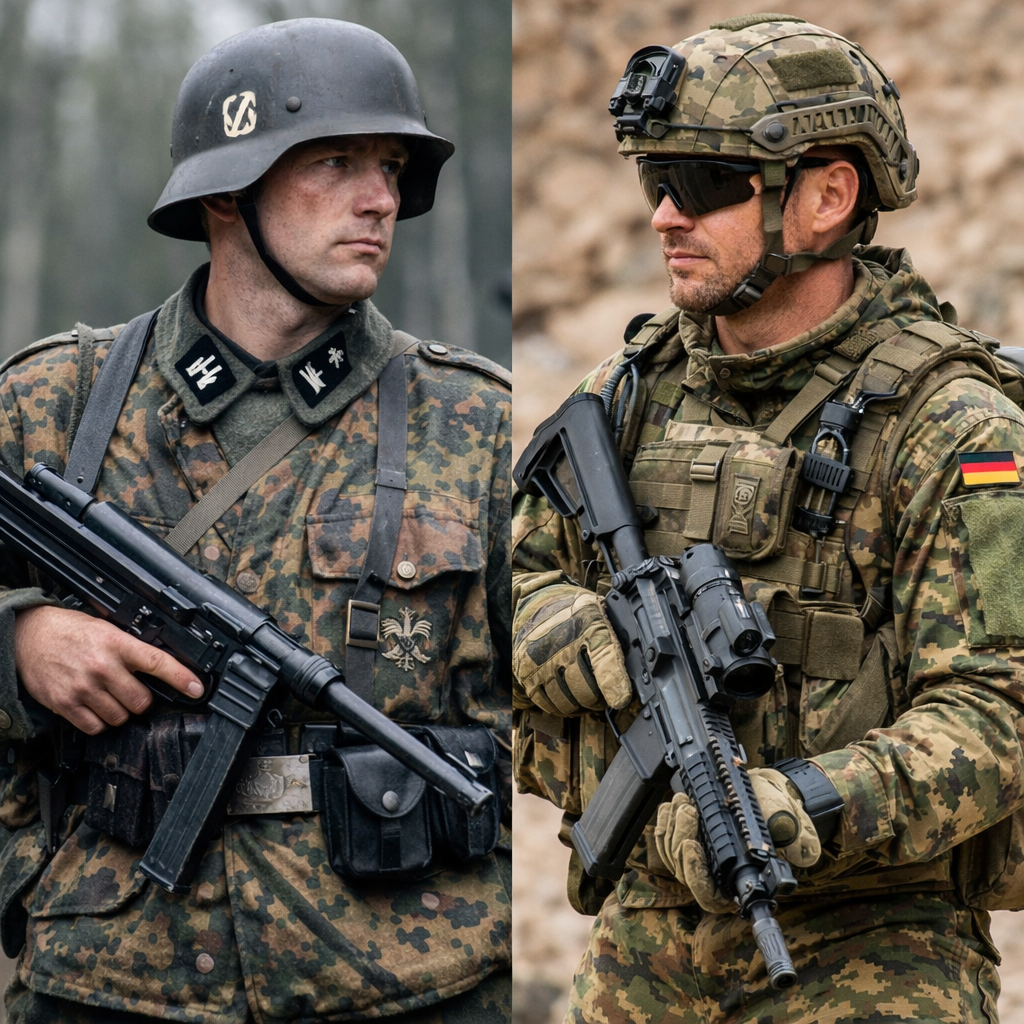
Field Gray & Black: The standard SS uniform during WWII was field gray, with black uniforms for some units. The gray was designed for its practical qualities, providing camouflage in forested or urban settings.
-
Camouflage Patterns: By 1943, the SS introduced early camouflage patterns known as "dot" patterns, which aimed to improve visibility in different environments. However, these patterns were often poorly executed and ineffective in the field.
-
Materials: The materials used in the uniforms were a mix of wool, cotton, and some synthetic blends. Wool was common for its warmth, but it was often too heavy and lacked breathability for extended wear.
-
Insignia: The SS uniforms were heavily embellished with distinctive insignia like skull and lightning bolt symbols, which became infamous during the war.
These uniforms were designed for aesthetics as well as functionality, but they ultimately faced significant limitations in combat.
Problems with Early Designs (PAS Problem)
Although the SS and Wehrmacht uniforms were a significant departure from earlier military gear, they were still quite limited in practical terms.
Key Problems with WWII Uniforms:
-
Lack of Comfort: Many soldiers reported that the woolen uniforms were uncomfortable and did not provide enough breathability for extended periods of wear, particularly in hot climates like those in North Africa or the Eastern Front.
-
Impractical Camouflage: The early camouflage patterns (e.g., dot patterns) were not fully optimized for different terrains, leading to poor concealment in the field.
-
Lack of Durability: The materials used often didn’t withstand harsh conditions, such as rain and mud, which made the uniforms ineffective in prolonged combat situations.
-
Inconsistent Fit: Many soldiers complained about ill-fitting uniforms, particularly with the early designs, which didn't account for different body types or the need for movement in battle.
Agitating the Issue: The Real Failures
During WWII, German soldiers faced extreme conditions on the frontlines. On the Eastern Front, where temperatures could plunge to -30°C in winter, soldiers found the uniforms inadequate for survival. The woolen material provided some warmth, but it wasn’t enough to keep soldiers comfortable or protected for extended periods.
In North Africa, the issue was even more apparent. The thick wool uniforms were far from ideal for the hot desert climate, where temperatures could soar to over 40°C. Soldiers complained of overheating, and the uniforms did little to protect them from the sun's harsh rays or the sandstorms common in the region.
Modern Bundeswehr Uniforms: Key Features
After the war and the formation of the Bundeswehr (German Federal Armed Forces) in 1955, Germany embarked on creating more practical and functional uniforms. Modern German soldiers wear uniforms designed for versatility, durability, and comfort, built to handle diverse operational environments.
Modern Innovations:
-
MultiCam & Fleckentarn Patterns: Today, the Bundeswehr uses a more modern camouflage pattern called Fleckentarn, which was introduced in the 1980s. This pattern is designed for forested and urban environments, allowing soldiers to blend in with their surroundings. More recently, the Bundeswehr adopted MultiCam, which is designed for use in diverse environments, including deserts and jungles.
-
Modular Gear: The modern Bundeswehr uniform incorporates modular components, allowing soldiers to customize their gear based on the mission. These components include attachments for extra gear like pouches, holsters, and hydration systems.
-
Flame-Resistant Fabrics: The uniforms are now made from flame-resistant fabrics, which offer protection in combat situations where fire risks are high, like in urban warfare or operations involving explosives.
-
Improved Insulation & Ventilation: Unlike their WWII predecessors, modern uniforms are designed with better insulation for cold climates and breathable fabrics for hot climates. Soldiers can now operate in a range of temperatures without sacrificing comfort or performance.
Features at a Glance:
-
Camouflage Patterns: Fleckentarn for forest environments, MultiCam for global use.
-
Fabric: Lightweight, flame-resistant, breathable, and insulated for various climates.
-
Modular Gear: Customizable pouches, hydration systems, and attachment points for mission-specific gear.
Pros & Cons: Comparing WWII and Modern German Uniforms
Pros of WWII SS Uniforms:
-
Aesthetic Appeal: The SS uniforms, especially in black, had a distinct and menacing look that became iconic. These uniforms were designed with a focus on presentation and military rank.
-
Durability for Specific Conditions: In cold, forested environments, the SS uniforms’ woolen fabric offered some insulation.
Cons of WWII SS Uniforms:
-
Uncomfortable for Long-Term Wear: Wool and cotton didn't offer comfort during long combat periods.
-
Ineffective Camouflage: The early camouflage patterns were not highly effective in all combat environments.
-
Material Limitations: Wool could not withstand wet conditions, and the uniform's fit was often problematic.
-
Heat Retention: In warmer climates, soldiers were prone to overheating in their thick wool uniforms.
Pros of Modern Bundeswehr Uniforms:
-
Versatility: Modern uniforms are designed for multiple climates, ensuring comfort and protection in hot, cold, and humid environments.
-
Customizability: Soldiers can adapt their gear to fit specific mission needs with modular attachments.
-
Improved Comfort: The use of breathable and flame-resistant fabrics allows for prolonged use without discomfort or safety risks.
Cons of Modern Bundeswehr Uniforms:
-
Cost: The advanced materials and modular designs come at a higher cost than older uniforms.
-
Logistical Challenges: The modular system can be difficult to standardize across large forces, creating potential for inconsistencies in gear supply.
Real-World Examples: From WWII to Afghanistan
WWII Eastern Front: A Harsh Test for SS Uniforms
The SS uniforms, particularly those worn during the brutal winter of the Eastern Front, were tested in extreme conditions. Soldiers who wore these uniforms faced freezing temperatures, snowstorms, and treacherous terrain. The wool fabric did little to protect against the cold, and soldiers suffered frostbite and hypothermia due to the inadequacies of their uniforms.
Modern Bundeswehr in Afghanistan: Operational Success
Fast forward to the 21st century, and the Bundeswehr's modern uniform has proven effective in diverse operational environments. During Germany's deployments in Afghanistan, soldiers operated in a variety of climates, from mountainous terrain to desert regions. The Fleckentarn and MultiCam uniforms offered the necessary adaptability, with their flame-resistant properties proving valuable in combat zones. The modular systems allowed soldiers to customize their gear for different mission types, whether engaging in combat or peacekeeping operations.
FAQs: Common Questions About German Military Uniforms
1. What was the primary purpose of SS uniforms?
The SS uniforms were designed for both functional use and symbolic purposes, projecting power and authority.
2. Why did SS camouflage patterns fail?
The early SS camouflage patterns were poorly designed for real-world environments and didn’t provide effective concealment in the field.
3. How has German military uniform design changed over time?
German military uniforms have evolved from heavy woolen fabrics and basic camouflage to advanced, modular gear with modern materials like flame-resistant fabrics.
4. Are modern Bundeswehr uniforms suitable for all climates?
Yes, modern Bundeswehr uniforms are designed for versatility, providing comfort and protection in a range of climates, including desert and arctic environments.
5. What are Fleckentarn and MultiCam?
Fleckentarn is the German military's original camouflage pattern, optimized for forested environments, while MultiCam is a more recent pattern designed for a wider range of global environments.
6. What are the benefits of modular military gear?
Modular gear allows soldiers to customize their equipment, improving flexibility and mission effectiveness by adapting to specific operational needs.
7. Are modern German uniforms more comfortable than WWII uniforms?
Yes, modern uniforms are designed for comfort, incorporating breathable fabrics, insulation for cold weather, and flame resistance.
Conclusion: The Solution to Uniform Problems
From the heavy woolen uniforms of the SS era to the cutting-edge designs of the modern Bundeswehr, the evolution of German military uniforms reflects both the changing nature of warfare and advancements in technology. While early uniforms had clear limitations, modern designs solve many of these problems by incorporating functional materials, improved fit, and modular customization. These innovations ensure that today’s soldiers are better equipped for the challenges they face on the battlefield, whether in the deserts of Afghanistan or the mountains of Eastern Europe.
