Introduction: How British Army Uniforms Evolved
Hey, ever wondered why khaki changed everything?
If you collect military uniforms or take part in reenactments, you already know the struggle. Finding a proper British army uniform is not easy. Photos online look fine. Descriptions sound right. But when the parcel arrives, the wool feels wrong. The buttons are off. The cut does not match period patterns. That is the problem.
From the bright red tunics of the Victorian British Army uniform to the practical World War I British Army khaki uniform, British military clothing changed for clear reasons. Climate. Tactics. Firepower. Industrial production. These were not fashion shifts. They were survival shifts.
Collectors today want era-correct details: wool weight, button count, pocket placement, and proper British Army Service Dress patterns. Reenactors need uniforms that look right in line formations and trench setups. But fakes waste money and ruin the scene.
In this guide, we break down the real history and the real specs. Then we show how paddelaters.com helps collectors source accurate replicas without guesswork.
Let’s start at the beginning.
Victorian British Army Uniform Breakdown
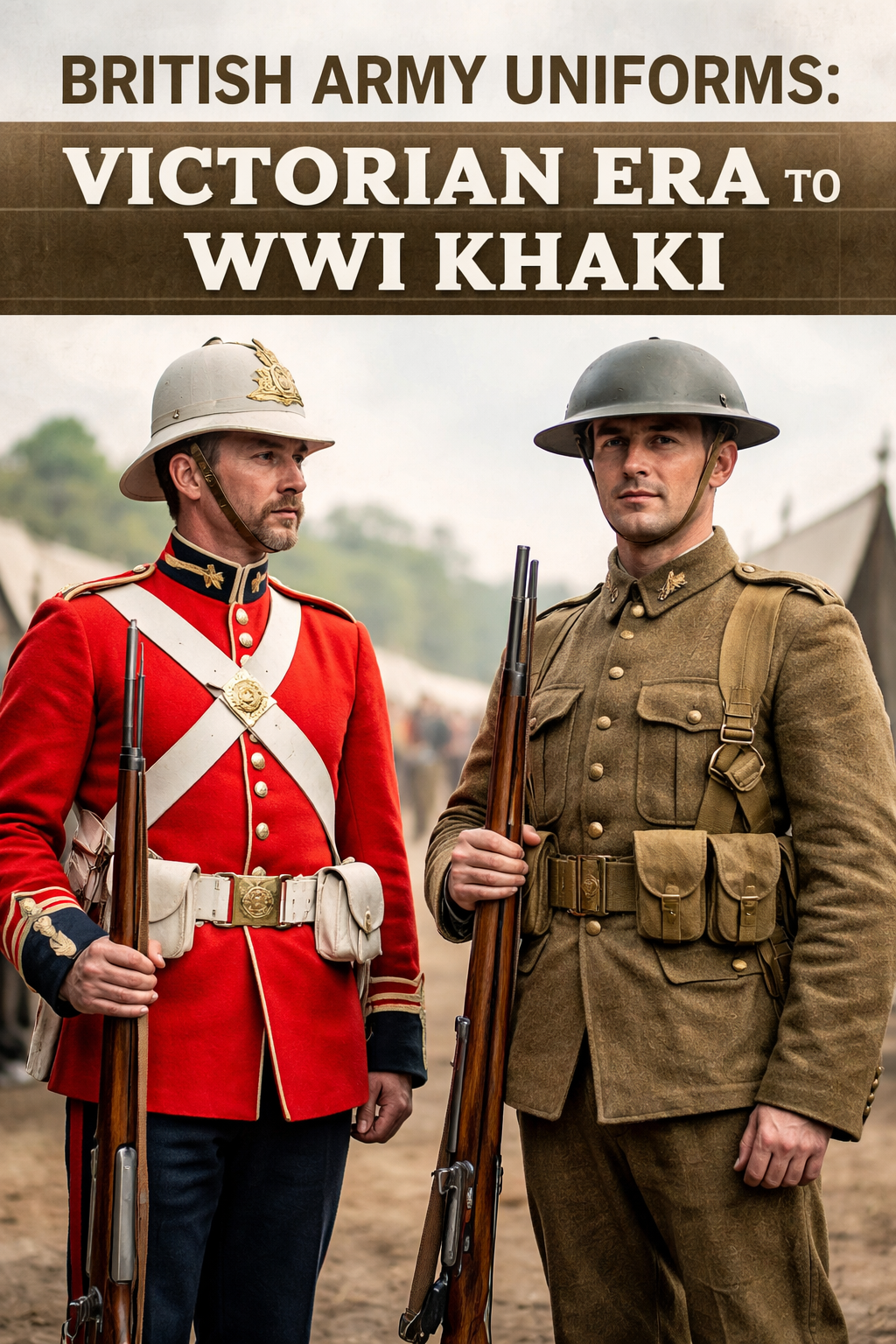
When people picture a 19th-century British soldier, they think red. That image comes from the scarlet tunic used widely during the Victorian era, including campaigns under Queen Victoria’s reign from 1837 to 1901.
The Scarlet Tunic
The standard Victorian British Army uniform featured:
-
Scarlet wool tunic (heavy wool broadcloth)
-
Stand-up collar
-
Brass regimental buttons (often 7 to 9 on the front depending on regiment and pattern year)
-
Shoulder straps or wings depending on branch
-
Dark blue trousers with colored piping
The wool was thick and tightly woven. It needed to hold shape and survive field wear. Dyeing technology at the time allowed stable red shades using cochineal and later synthetic dyes. The color also had a practical side earlier in the century. Black powder smoke made visibility poor, so camouflage was not yet a priority.
Equipment and Headgear
Headgear changed over the Victorian period. Soldiers wore:
-
Shako (early to mid-19th century)
-
Pith helmet in colonial campaigns
-
Home Service helmet (late Victorian era)
Belts were white buff leather. Ammunition pouches were blackened leather. Everything had a formal, structured look.
But here’s the issue.
By the late 19th century, rifles improved. Smokeless powder appeared. Soldiers were now visible targets in bright scarlet. During conflicts like the Anglo-Boer War (1899–1902), British troops faced enemies using earth-toned clothing and modern rifles. Red stood out. Casualties rose.
That forced change.
World War I British Army Khaki Uniform Details
Khaki was not new in 1914. It had been used in India since the 1840s. The word “khaki” comes from Urdu, meaning dust-colored. But by World War I, khaki became standard across the British Army.
British Army Service Dress (1902 Pattern)
In 1902, the British Army introduced Service Dress in khaki serge wool. By World War I, this was the main field uniform.
The World War I British Army khaki uniform typically included:
-
Khaki wool tunic (four front pockets by 1905 pattern)
-
Five large brass or bronze buttons on the front
-
Stand and fall collar
-
Shoulder straps with rank badges
-
Khaki wool trousers or breeches
-
Puttees (long wool strips wrapped around the lower leg)
-
Brodie steel helmet (introduced in 1916)
The 1902 and 1905 Service Dress patterns had specific pocket shapes and pleats. Early tunics had two pleated chest pockets and two lower pockets. Buttons were usually general service pattern unless replaced with regimental types.
The wool weight was lighter than Victorian broadcloth. It allowed easier movement and mass production. Britain had to equip millions. By 1918, over five million men had served in the British Army.
Khaki worked. It reduced visibility. It suited trench warfare. It matched muddy conditions in France and Belgium.
But for collectors today, getting these details right is not simple. One wrong pocket. One wrong shade. The whole impression fails.
Key Features and Materials: What to Look For
If you are sourcing a British army uniform for display or reenactment, here are the main features to check.
1. Fabric Type
Victorian British Army uniform:
-
Heavy wool broadcloth
-
Thick weave
-
Scarlet dye specific to regiment era
World War I British Army khaki uniform:
-
Khaki serge wool
-
Medium weight
-
Matte finish, not shiny
Cheap replicas often use polyester blends. They feel lighter and drape differently.
2. Button Count and Pattern
Victorian tunics:
-
7–9 brass buttons depending on regiment
-
Regimental crests stamped into metal
WWI Service Dress:
-
Five-button front
-
General Service buttons common in field use
Button spacing matters. Period photos show exact alignment.
3. Pocket Design
Service Dress pockets:
-
Pleated chest pockets
-
Flap with pointed or straight cut depending on pattern year
Flat modern pockets are a clear red flag.
4. Construction Details
Look at:
-
Hand-finished seams or period-style stitching
-
Proper collar shape
-
Correct placement of belt hooks (WWI tunics had internal belt support)
paddelaters.com lists these specs clearly in product descriptions. That helps collectors compare against historical references before buying.
The Problem: Fakes Waste Money and Ruin Reenactments
Let’s talk honestly.
Have you ever turned up at a reenactment and spotted someone in a bright green “khaki” uniform? Or with plastic buttons that shine under sunlight?
It breaks the scene.
Collectors struggle because online marketplaces are filled with mass-produced versions. They often:
-
Use incorrect fabric
-
Ignore proper Service Dress patterns
-
Mix Victorian and WWI elements in one piece
-
Skip correct insignia placement
You spend money. Shipping takes weeks. The uniform arrives. It does not match the period photo you studied.
For reenactors, that means more than disappointment. It affects group standards. Many events require inspection before participation. If your British Army Service Dress is wrong, you may not pass.
That is frustrating.
The Solution: Era-Accurate Replicas from paddelaters.com
The solution is simple. Buy from a source that focuses on historical accuracy.
paddelaters.com provides British army uniform replicas based on documented patterns. Product listings specify:
-
Wool type used
-
Button pattern
-
Correct pocket layout
-
Era reference (Victorian, 1902 Service Dress, WWI khaki)
For Victorian British Army uniform pieces, they follow scarlet tunic structure with proper brass buttons and period cut. For World War I British Army khaki uniform items, they replicate the 1902/1905 Service Dress with four-pocket layout and correct five-button front.
That transparency matters.
Instead of guessing from low-detail images, you compare specs to known historical standards before purchase.
Pros & Cons for Collectors and Reenactors
Pros
-
Accurate representation of British Army Service Dress
-
Correct materials such as wool serge
-
Proper button count and placement
-
Better fit for reenactment inspections
-
Suitable for museum-style display
Cons
-
Wool uniforms require care and dry storage
-
Period-accurate materials cost more than synthetic copies
-
Limited customization compared to modern clothing
Still, for serious collectors, accuracy is worth it. A correct World War I British Army khaki uniform improves your overall presentation. A proper Victorian British Army uniform stands out in educational events.
Real-World Example: Reenactor Case Study
Let’s look at a simple case.
Arjun, a reenactor based in Europe, joined a WWI living history group. He first purchased a low-cost khaki tunic from a general costume seller. The problems showed quickly:
-
Fabric was thin cotton, not wool
-
Pockets were flat
-
Buttons were wrong size
-
Shade was closer to olive green than khaki
During a group drill review, his uniform did not match others wearing correct British Army Service Dress patterns.
He then sourced a World War I British Army khaki uniform from paddelaters.com. The product page listed wool serge fabric, five-button front, pleated pockets, and correct shoulder strap placement.
At the next event, his setup blended with the rest of the unit. Group photos looked consistent. Visitors asked informed questions about Service Dress patterns instead of pointing out differences.
No hype. Just a better match to documented history.
FAQs
1. When did the British Army stop using red uniforms?
Scarlet remained in ceremonial use. Field adoption of khaki became standard by the early 1900s, especially after the Boer War.
2. What is British Army Service Dress?
It is the khaki field uniform introduced in 1902 and used widely in World War I.
3. What fabric was used in WWI British uniforms?
Mainly wool serge in khaki color.
4. How many buttons are on a WWI tunic?
Typically five on the front for Service Dress.
5. Were Victorian uniforms fully wool?
Yes, heavy wool broadcloth was common for tunics.
6. Why did khaki replace red?
Improved firearms and smokeless powder made bright colors unsafe in combat.
Conclusion: Build Your Collection the Right Way
British army uniform history shows clear evolution. From the structured scarlet of the Victorian British Army uniform to the practical World War I British Army khaki uniform, each change reflected battlefield reality.
For collectors and reenactors, details matter. Fabric weight. Button count. Pocket style. British Army Service Dress patterns.
