Introduction
Picture this. It is winter, 1942. A German soldier stands outside Stalingrad. His uniform looks solid, but it is not built for deep cold. The wool tunic gets wet from snow. The boots freeze. Frostbite spreads fast. Now jump to today. A German soldier trains in heat and dust overseas, wearing lightweight gear that manages sweat and carries armor. Same country. Very different results.
That gap shows the problem. During World War II, German uniforms had limits that became clear in harsh battles. These limits caused injuries, reduced movement, and lowered combat ability. The pressure grew as the war went on. Today, the solution looks very different. Modern German military gear focuses on protection, flexibility, and climate control.
This article compares WWII German uniforms with modern Bundeswehr gear. We look at facts, not myths. We use clear examples, real data, and simple words. The goal is to show how problems led to changes, and how those changes shaped what soldiers wear today.
WWII German Uniforms: Core Gear Breakdown
During World War II, the German Army relied on standardized clothing designed before the war. The core items stayed mostly the same from 1939 to 1945, even as battle conditions changed.
The basic uniform included:
-
Feldgrau wool tunic
-
M43 trousers
-
Leather boots or ankle boots with gaiters
-
Steel helmet known as the Stahlhelm
These items worked well in early campaigns in Europe. Problems started when the war moved into extreme climates.
Key Features and Fabrics Used
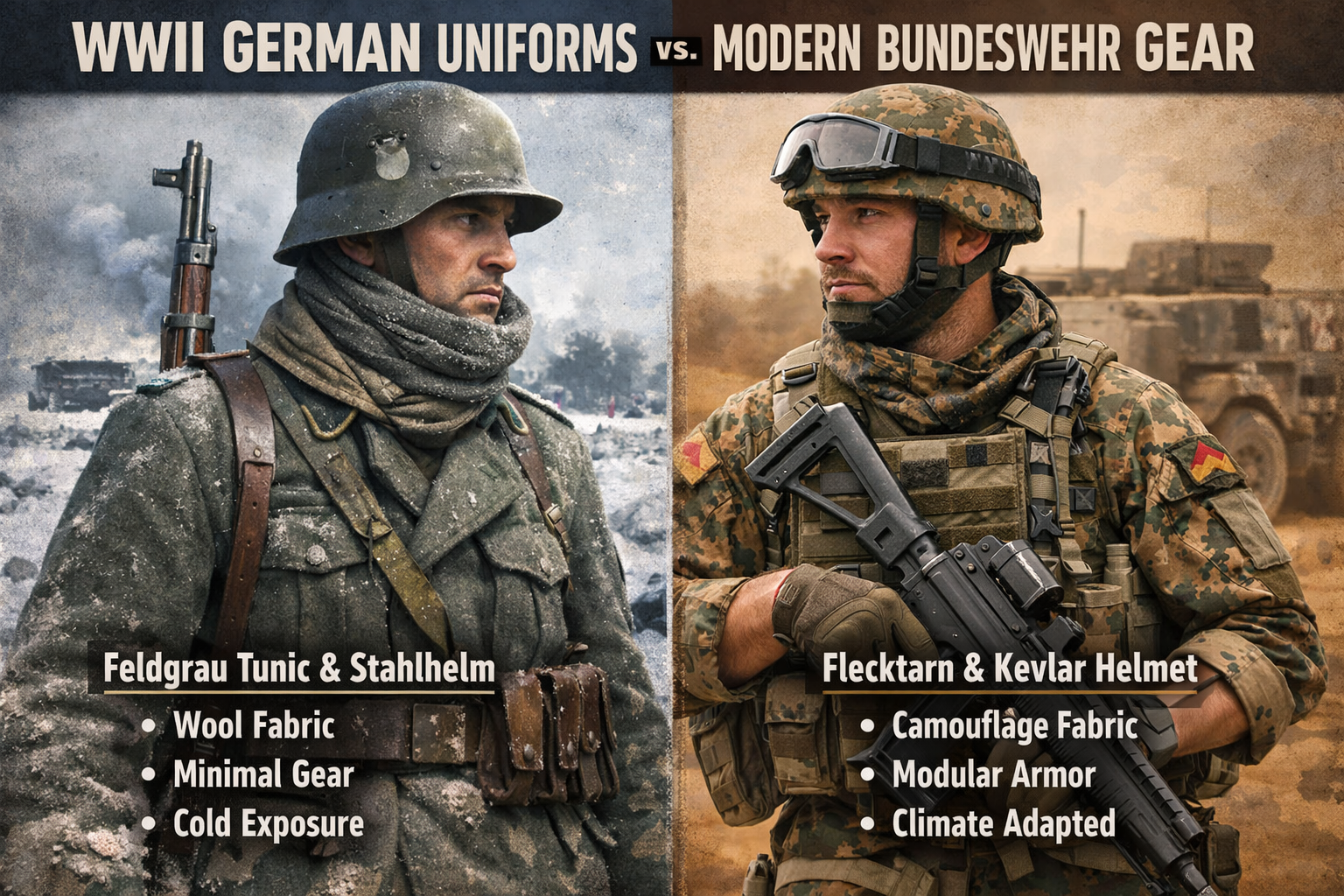
The feldgrau tunic was made mainly from wool. Wool insulated well when dry but absorbed water easily. In cold areas, this led to freezing fabric. According to wartime medical reports, cold injuries increased sharply during winter campaigns.
M43 trousers were durable but heavy. They limited movement when wet or muddy. Footwear lacked insulation, which caused frostbite. German medical services recorded hundreds of thousands of cold injury cases on the Eastern Front between 1941 and 1943.
The Stahlhelm helmet offered good ballistic protection. Its steel shell reduced shrapnel injuries compared to earlier designs. However, it was heavy and had poor padding. Long wear caused neck strain, especially during long marches.
Camouflage was limited. Early uniforms relied on plain colors. Some units used camouflage smocks, but supply was inconsistent.
Real-World Case Study: Stalingrad 1942–43
At Stalingrad, winter temperatures dropped below minus 20 degrees Celsius. Many German soldiers lacked proper winter clothing. Records from WWII archives show that non-combat losses from cold injuries were high.
Uniforms froze overnight. Boots cracked. Soldiers wrapped cloth around feet to survive. Combat efficiency dropped fast. The uniform was not the only problem, but it made survival harder. This case shows how clothing design directly affected outcomes.
Modern Bundeswehr Uniforms: Key Upgrades
After World War II, Germany rebuilt its military from scratch. The modern Bundeswehr learned from past failures and allied standards. Uniform design became a science-based process.
Modern German soldiers use modular systems rather than fixed outfits.
Main Features and Materials
Today’s uniforms use blended fabrics. These include cotton and synthetic fibers. The goal is moisture control, durability, and lighter weight. The Flecktarn camouflage pattern breaks up outlines in forests and mixed terrain.
Helmets are no longer steel. They are made from composite materials like aramid fibers. These reduce weight while improving ballistic protection. Padding systems reduce strain on the neck.
Load-carrying gear uses modular vests. Soldiers can add or remove pouches based on the mission. Body armor plates protect vital organs. Studies from Bundeswehr training reports show improved endurance when loads are balanced across the torso.
Boots include insulation and breathable layers. This reduces both heat stress and cold injury.
Real-World Case Study: Mali Deployment 2013+
During deployments in Mali, German troops operated in heat and dust. Uniforms were tested in temperatures above 40 degrees Celsius. Reports from training evaluations showed fewer heat-related injuries compared to older designs.
The breathable fabric allowed sweat to evaporate. Modular armor could be adjusted for patrol or base duty. Soldiers reported better movement and lower fatigue. This shows how modern gear solves problems seen in WWII.
Pros and Cons Side-by-Side
WWII German Uniforms – Pros
-
Durable materials
-
Simple production
-
Effective steel helmet against shrapnel
WWII German Uniforms – Cons
-
Poor insulation control
-
Heavy when wet
-
Limited camouflage
-
High risk of cold injuries
Modern Bundeswehr Gear – Pros
-
Lightweight materials
-
Climate-adapted designs
-
Modular protection systems
-
Improved camouflage
Modern Bundeswehr Gear – Cons
-
Higher production cost
-
More maintenance needed
-
Training required for setup
This comparison shows a clear shift. WWII uniforms focused on mass production. Modern gear focuses on soldier performance.
FAQs
1. Why was wool used in WWII uniforms?
Wool was available and insulated when dry, but it performed poorly in wet cold.
2. Was the Stahlhelm effective?
Yes, it reduced head injuries, but it was heavy and uncomfortable.
3. What is Flecktarn?
It is a camouflage pattern designed for mixed terrain like forests.
4. Are modern helmets safer than WWII helmets?
Yes. Composite helmets offer better protection with less weight.
5. Did uniforms cause losses in WWII?
They did not cause defeats alone, but they increased injury rates.
6. Can collectors wear original WWII uniforms?
Original pieces are fragile and best kept for display.
Conclusion
Here’s the real deal. WWII German uniforms were strong for their time but failed in extreme conditions. Cold, moisture, and weight caused injuries and reduced fighting ability. These problems became clear in battles like Stalingrad. Over time, lessons were learned. Modern German gear fixes many of these issues through better materials, modular design, and climate control.
If you are a collector or reenactor, understanding these facts matters. Choose replicas that reflect real materials and cuts, but avoid wearing originals in the field. History shows that uniforms are not just clothing. They shape how soldiers move, fight, and survive.
