HORIZON BLUE AND THE ADRIAN HELMET: THE FRENCH UNIFORMS OF WORLD WAR I
Introduction
World War I brought about significant challenges for soldiers, and one of the most overlooked aspects of their struggle was the uniform they wore. While often associated with bravery and resilience, the French military uniforms in WW1 became a symbol of the harsh conditions soldiers faced. The uniforms, meant to protect, often failed to do so in the brutal reality of trench warfare. As more than 1.3 million French soldiers perished in the Great War, the inadequacies of these uniforms played a role in their suffering and death. In this post, we'll take a closer look at how French uniforms were designed, how they fell short in the trenches, and the lasting legacy they left on military gear.
The Problem: WW1 Uniforms Faced Brutal Trench Reality
During the early days of World War I, the French Army's uniform, like many others at the time, was designed with traditional ideas of military display in mind. The uniform featured bright colors, which were intended to instill pride and unity among soldiers. However, the reality of trench warfare soon proved that such designs were more a hindrance than a help.
The most infamous example was the bright blue color of the French infantry uniforms, known as horizon blue. While initially a symbol of the French Army’s legacy and patriotism, this vivid color was highly visible to enemy snipers in the trenches. It contrasted starkly against the earth-toned environment of the Western Front, leaving soldiers vulnerable to attack. Moreover, the uniform’s cut and design were not suitable for the demands of trench warfare, where constant movement, extreme weather, and the need for comfort were critical.
The problem wasn’t just about visibility—it was also about protection. The uniforms were often poorly fitted, limiting movement and leaving soldiers uncomfortable and prone to fatigue. With limited materials, many uniforms offered little in the way of warmth or protection from the elements, especially in the harsh winters of the front lines.
Agitating Factors: How Uniforms Contributed to 1.3M French Deaths
The inadequacies of the French WW1 uniforms were compounded by the brutal conditions soldiers faced, which contributed directly to the staggering death toll of over 1.3 million French soldiers. The uniforms were designed for a type of war that no longer existed in the trenches of World War I. French soldiers often had to endure extreme temperatures, mud, and rain, all while being inadequately equipped.
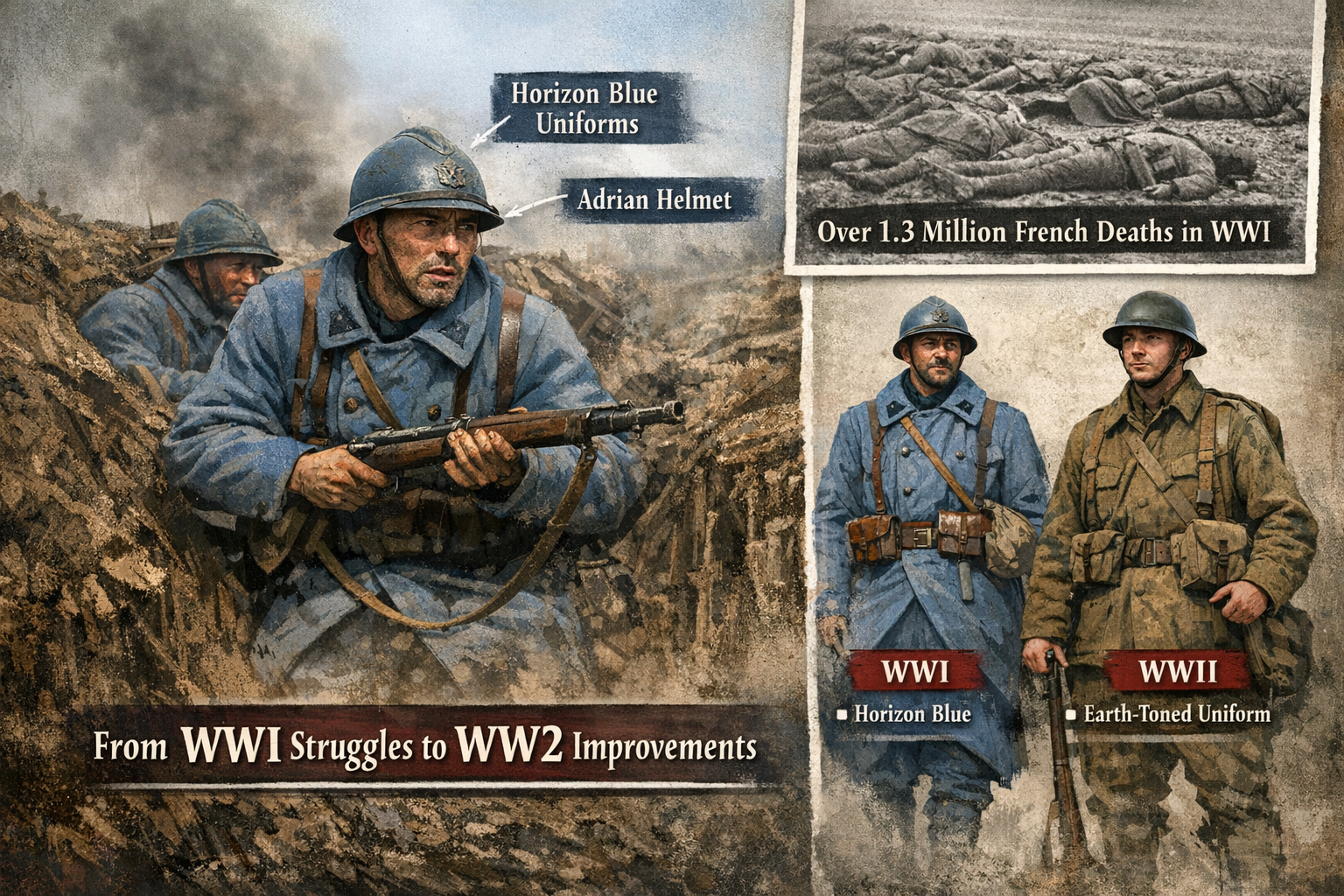
The bright horizon blue not only made soldiers easy targets for enemy snipers, but it also contributed to the psychological toll of soldiers under fire. Soldiers had to battle the enemy, but they also fought against the fatigue and discomfort brought on by their poorly designed uniforms.
Take, for example, the Battle of Verdun, one of the longest and most horrific battles of WW1. The French suffered nearly 400,000 casualties, with a significant portion attributed to injuries and deaths directly related to their uniforms. In the relentless mud, rain, and freezing conditions, the French soldiers' uniforms deteriorated quickly, exposing them to both the enemy and the elements. The lack of adequate gear and the ill-suited design of the uniforms only compounded the suffering, increasing both injury rates and fatalities.
In the years that followed, many historical accounts revealed how French soldiers, struggling with both the physical and mental toll of war, were further hindered by their military attire. The failure of the uniform to provide comfort and protection during the brutal conditions of trench warfare undoubtedly contributed to the death toll.
Key Features of French WW1 Uniforms
Despite the shortcomings, the French military did adopt some innovative features in their uniforms during World War I. The most notable of these was the Adrian helmet, which became a symbol of French bravery on the battlefield. Made of steel, the helmet was designed to protect soldiers' heads from shrapnel, a constant threat in trench warfare. Though it was a significant improvement over the earlier cloth headgear, its design still left much to be desired, as it did not fully cover the neck or provide complete protection from side impacts.
The horizon blue uniform itself was made from wool, offering a degree of warmth but also creating issues in terms of comfort and moisture retention. As soldiers spent weeks in the trenches, their woolen uniforms would often become soaked in rain or mud, contributing to the risk of hypothermia and trench foot.
One important element was the French leather boots, which, despite being sturdy and designed for long walks, were not suitable for the conditions of trench warfare. The boots often became caked in mud and water, causing blistering, fungal infections, and other foot-related ailments, worsening soldiers' already desperate conditions.
The French uniform was also equipped with a greatcoat, which provided some protection against the cold but was heavy and cumbersome in the trenches. Over time, soldiers often discarded the heavy coats for lighter alternatives, reducing their warmth and protection.
The Solution: Design Wins and WW2 Upgrades
By the time World War II rolled around, many of the lessons learned from the shortcomings of the French WW1 uniform had been applied. The horizon blue was discarded in favor of more practical earth-toned colors that blended better with the battlefield’s environment. The French military also learned to design uniforms that allowed for more freedom of movement, better suited to the changing nature of warfare.
The Adrian helmet was also refined during WW2. The French made it lighter, improving comfort without compromising its protective qualities. Although the Adrian helmet remained a symbol of French military history, it was eventually replaced in the post-WW2 period with more modern headgear that offered better protection from both shrapnel and ballistic threats.
Soldiers in World War II also benefited from better footwear, including boots designed specifically for wet and muddy conditions. The modernized uniform included waterproof layers and better-fitting garments, ensuring soldiers could move more easily and remain comfortable in extreme conditions.
These design improvements were a direct result of the mistakes made during World War I, and they reflected a new understanding of what soldiers needed to survive on the front lines.
Pros and Cons in Action: Real-World Examples
One of the most notable battles where French uniforms were tested to their limits was the Battle of Verdun. The long and grueling battle lasted from February to December 1916, and the French Army faced relentless attacks from the German forces. During this battle, soldiers experienced the full spectrum of discomfort associated with their uniforms. From the heavy woolen horizon blue coats to the inadequate footwear, the soldiers’ uniforms provided little protection against the constant exposure to mud and water.
Many soldiers in Verdun contracted trench foot due to the poor footwear and inadequate protection against the damp, muddy conditions. This debilitating condition, which caused the feet to become numb and eventually rot, was one of the leading causes of injury among French soldiers.
Despite these shortcomings, the Adrian helmet performed well in protecting soldiers from shrapnel during artillery bombardments. Its steel construction proved to be a valuable asset in reducing head injuries, which were common in the early days of the war.
Modern Takeaways and FAQs
-
Why did the French Army continue using bright uniforms despite their visibility?
The use of bright colors in uniforms was a tradition rooted in military display and pride. It took time for military leaders to realize the tactical disadvantages of such uniforms in modern warfare. -
What improvements were made to French military gear in WW2?
French soldiers in WW2 wore earth-toned, more practical uniforms, and their helmets were upgraded to offer more comfort and protection. -
How did the Adrian helmet perform in WW1?
The Adrian helmet performed well in protecting soldiers from shrapnel, significantly reducing head injuries compared to previous headgear. -
Did the French improve their footwear for WW2?
Yes, the French military developed better footwear for WW2, designed specifically for wet and muddy conditions. -
What lasting legacy did the French WW1 uniform leave on military gear?
The French WW1 uniform's shortcomings led to significant changes in uniform design, influencing military gear development well into the 20th century.
Conclusion
The French uniforms of World War I, despite their initial shortcomings, played a crucial role in shaping modern military gear. From the bright horizon blue to the Adrian helmet, the design flaws became learning points for future conflicts. While the uniforms of WW1 contributed to the hardships faced by soldiers, they also sparked innovations that helped protect future generations. The lessons learned from these uniforms are still visible in the gear worn by soldiers today. In reflecting on the struggles of those who fought in the trenches, it’s clear that while uniform design may seem like a small detail, it has a lasting impact on a soldier's ability to survive and fight in the most extreme conditions.
