Introduction: The 1914 Reality Officers Faced
August 1914. German officers marched into Belgium wearing polished leather helmets with tall spikes and dark blue parade uniforms. It looked sharp. But within months, reality hit hard.
Modern artillery, machine guns, and long-range rifles made bright uniforms dangerous. Officers stood out. Snipers often targeted them first. Mud, rain, and cold trenches did not care about tradition.
The problem was clear: pre-war uniforms were built for parade grounds, not industrial war.
By 1915, the Imperial German Army changed course. Regulations shifted to practical designs. Field gray cloth replaced bright colors. Leather helmets were modified or replaced. Tunics were simplified.
These changes were not cosmetic. They were survival-driven. In this guide, we break down World War 1 German officer uniforms using real historical data—fabric types, helmet specs, 1915 regulations—and explain what they mean today for collectors, reenactors, and buyers on eBay or Amazon.
Key Features of Imperial German Uniforms
Officer Tunics (Field Gray / “Field Gray” Wool)
Before 1914, many German states used dark blue uniforms. After mobilization, the M1910 and later M1915 field tunics became standard. These were made from wool in “field gray,” meaning a muted gray-green shade designed for camouflage.
Fabric Specs:
-
Wool serge or wool blend
-
Average weight: around 600–700 grams per square meter (varied by manufacturer)
-
Lined interior, often with cotton or linen
-
Officer versions privately tailored, higher quality than enlisted issue
1915 Regulation Changes:
-
Simplified cuffs
-
Removal of bright piping in many cases
-
Reduced decorative elements
-
Matte buttons instead of polished where possible
Officers often purchased their own uniforms. That means quality varied. Some tunics were finely tailored with better stitching and tighter weave wool. For collectors, this is important. Officer tunics are usually lighter and better finished than enlisted M1915 tunics.
Trousers and Field Gear
Officers wore:
-
Field gray trousers
-
Riding breeches for mounted officers
-
Tall leather boots (knee-high)
-
Or ankle boots with puttees (cloth leg wraps) later in war
In early war, red piping on trousers was common for some regiments. By 1915–1916, such bright features were reduced or removed to avoid visibility in combat.
Leather boots were heavy and durable. But mud in places like Flanders made them hard to maintain. As trench warfare expanded, practicality became more important than style.
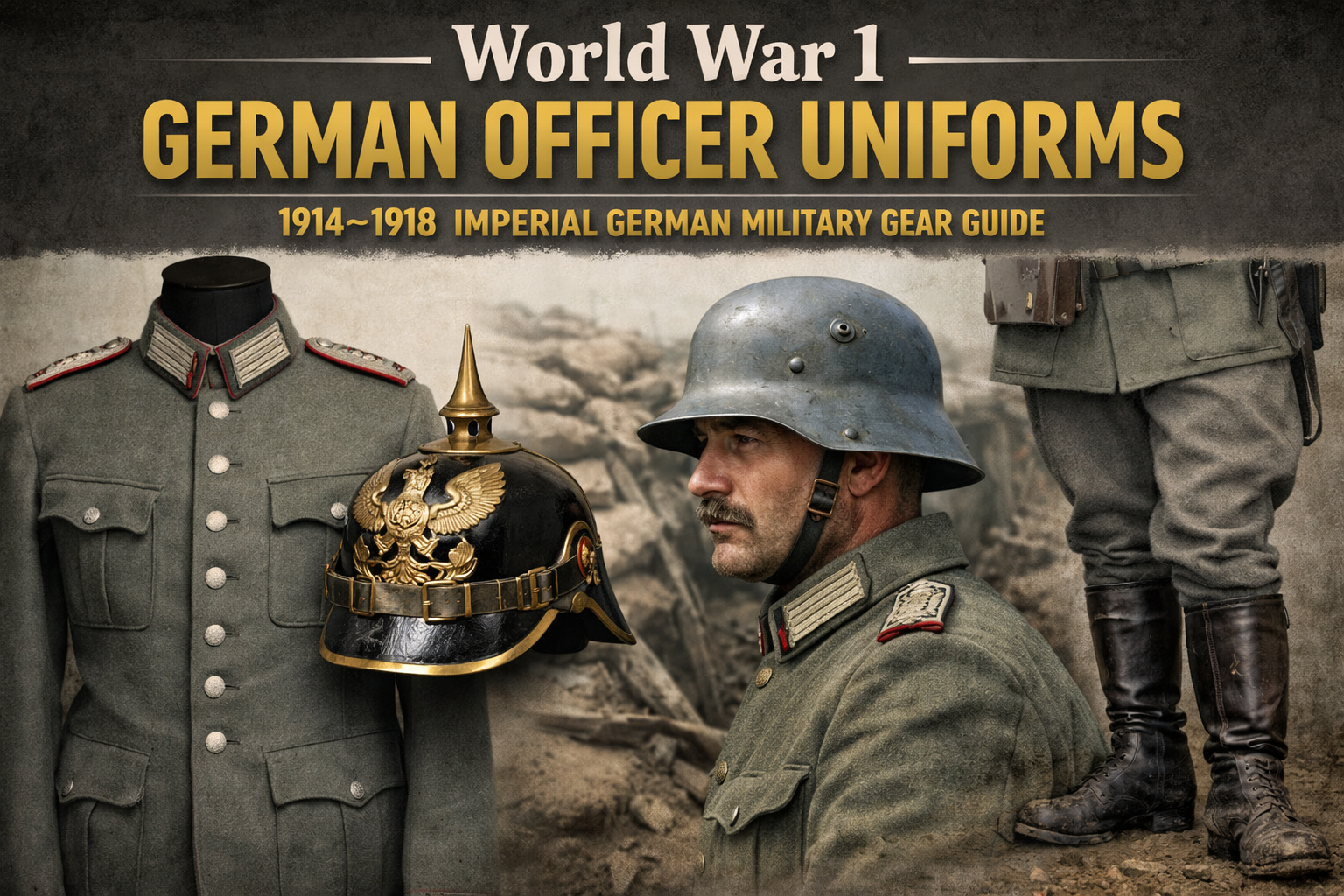
Headgear: Pickelhaube to Steel Helmet
The Pickelhaube (spiked helmet) is the most famous symbol of Imperial German uniforms.
Pickelhaube Specs (Pre-1916):
-
Boiled leather shell
-
Brass or nickel fittings
-
Removable spike
-
Weight: around 1–1.5 kg depending on model
-
Cloth field cover introduced in 1914
By 1915:
-
Brass fittings often replaced with painted steel
-
Cloth covers widely used in the field
-
Regimental numbers sometimes removed from covers for security
The spike was not just decorative. It had historical roots. But in trench warfare, it was impractical.
In 1916, the German Army introduced the Stahlhelm (steel helmet). This helmet offered real ballistic protection against shrapnel.
Stahlhelm M1916:
-
Steel construction
-
Weight: about 1.4 kg
-
Deep sides for ear protection
-
Vent lugs on sides
For officers, this marked a major shift. Protection replaced tradition.
German Military Uniforms in Action: Real-World Examples
Case Study: The Somme, 1916
The Battle of the Somme (July–November 1916) tested German military uniforms under extreme conditions.
German forces faced:
-
Constant artillery shelling
-
Deep mud
-
Long trench rotations
-
Cold and wet weather
Field gray uniforms helped reduce visibility. British reports often noted difficulty spotting German troops compared to earlier bright uniforms of other armies.
The introduction of the M1916 steel helmet reduced head injuries from shell fragments. German medical reports showed significant drops in severe head trauma after steel helmet distribution began in 1916.
Wool tunics provided insulation. But they also absorbed water. In prolonged rain, uniforms became heavy. Officers often had better-quality wool, which held shape longer but still suffered from trench conditions.
Officer Visibility and Rank Markings
Officers were marked by:
-
Shoulder boards
-
Collar patches
-
Quality of tailoring
In early war, these features made them stand out. Snipers targeted officers. By mid-war, efforts were made to reduce visible distinctions in frontline conditions.
Some officers removed bright insignia when near the front. This was not always regulation, but survival often guided decisions.
Pros & Cons for Wearers and Modern Collectors
For WW1 Wearers (Historical Perspective)
Pros:
-
Field gray color reduced visibility
-
Wool provided insulation in cold climates
-
Tailored officer uniforms allowed better fit
-
Stahlhelm improved head protection from shrapnel
Cons:
-
Wool heavy when wet
-
Early Pickelhaube offered little ballistic protection
-
Decorative elements increased visibility early in war
-
Leather gear required regular maintenance in mud
For Modern Collectors & Reenactors
Pros:
-
Strong historical recognition (Pickelhaube and Stahlhelm iconic)
-
Officer tunics often high craftsmanship
-
Wide range of ranks and states (Prussian, Bavarian, Saxon)
-
Active market on eBay and militaria auctions
Cons:
-
High prices for original officer items
-
Reproductions vary in accuracy
-
Wool weight in reproductions often incorrect
-
Fake markings common in online marketplaces
Buying Tip:
Original WW1 German officer tunics often show period stitching and natural aging in wool fibers. Check lining, tailor labels, and button backmarks. For helmets, verify shell thickness and interior liner construction.
Common FAQs
1. What color were WW1 German officer uniforms?
They were mainly “field gray,” a gray-green shade introduced before the war and standardized by 1910–1915 regulations.
2. Did officers always wear the Pickelhaube?
Early in the war, yes. After 1916, many wore the steel M1916 helmet in combat zones.
3. What fabric was used in Imperial German uniforms?
Mostly wool serge. Officer versions were often privately tailored with higher-quality wool blends.
4. Were officer uniforms different from enlisted ones?
Yes. Officers purchased their uniforms privately. They often had better tailoring, finer cloth, and more detailed insignia.
5. How heavy was the Pickelhaube?
Typically between 1 and 1.5 kilograms depending on fittings and size.
6. Why did Germany switch to the steel helmet in 1916?
High head injury rates from artillery shrapnel led to adoption of the M1916 steel helmet for better protection.
7. Are original WW1 German officer uniforms legal to buy?
In most countries, yes. However, buyers should check local laws regarding militaria and historical items.
Conclusion: From Parade to Practical Survival
At the start of World War 1, German officer uniforms reflected tradition. Dark colors, polished fittings, and spiked helmets showed rank and pride.
But war forced change.
The 1915 regulations reduced decoration. Field gray became standard. In 1916, steel helmets replaced leather spikes at the front. These were not fashion updates. They were survival tools.
For collectors and reenactors today, Imperial German uniforms offer a clear timeline of adaptation. You can see the shift from 19th-century style to modern battlefield function in just two years.
If you are buying, focus on regulation details. Check fabric weight, helmet construction, and insignia accuracy. Whether you collect for history, reenactment, or resale on eBay, understanding the facts behind these uniforms helps you make better decisions.
World War 1 German officer uniforms are not just clothing. They are proof of how quickly tradition can change under pressure.
