Introduction: Life in the Trenches and the Uniform Problem
World War One trenches were wet, cold, muddy, and cramped. British soldiers lived for weeks in the same clothes, often soaked through, crawling through mud, and carrying heavy loads under fire. Early in the war, uniforms were not ready for this kind of fighting. Bright colors, poor head protection, and awkward gear caused real problems. This is the problem side of the PAS framework. Soldiers needed clothing that could survive mud, rain, gas, and constant wear.
The agitation came quickly. Wool tunics stayed wet for days. Leather boots shrank and split. Soldiers suffered trench foot, heat exhaustion, and shrapnel wounds that simple changes could have reduced. The British Army had to rethink everything fast.
The solution was the steady evolution of the 1902 pattern service dress and its supporting equipment. This uniform system became one of the most practical field outfits of the war. It was not perfect, but it worked well enough to equip millions of men and is still studied, collected, and reenacted today.
WW1 British Uniform History
At the outbreak of war in 1914, Britain already had experience from colonial campaigns. Lessons from South Africa pushed the army away from red coats and toward khaki. The British WW1 uniform was built around usefulness, not display.
Between 1914 and 1918, over five million uniforms were produced for the British and Commonwealth forces. Factories across Britain worked nonstop. Patterns were simplified to speed production, and materials were chosen for durability over comfort. The result was a standard look that defined the WW1 British army uniform.
Early shortages meant some soldiers wore mismatched kit, but by 1916 most frontline troops were fully equipped with standardized clothing and gear. This shift saved time, reduced confusion, and improved survival.
Key Parts of the 1902 Pattern Service Dress
The 1902 pattern service dress formed the backbone of the British soldier’s clothing. It was designed for long wear and easy repair.
WW1 British Tunic
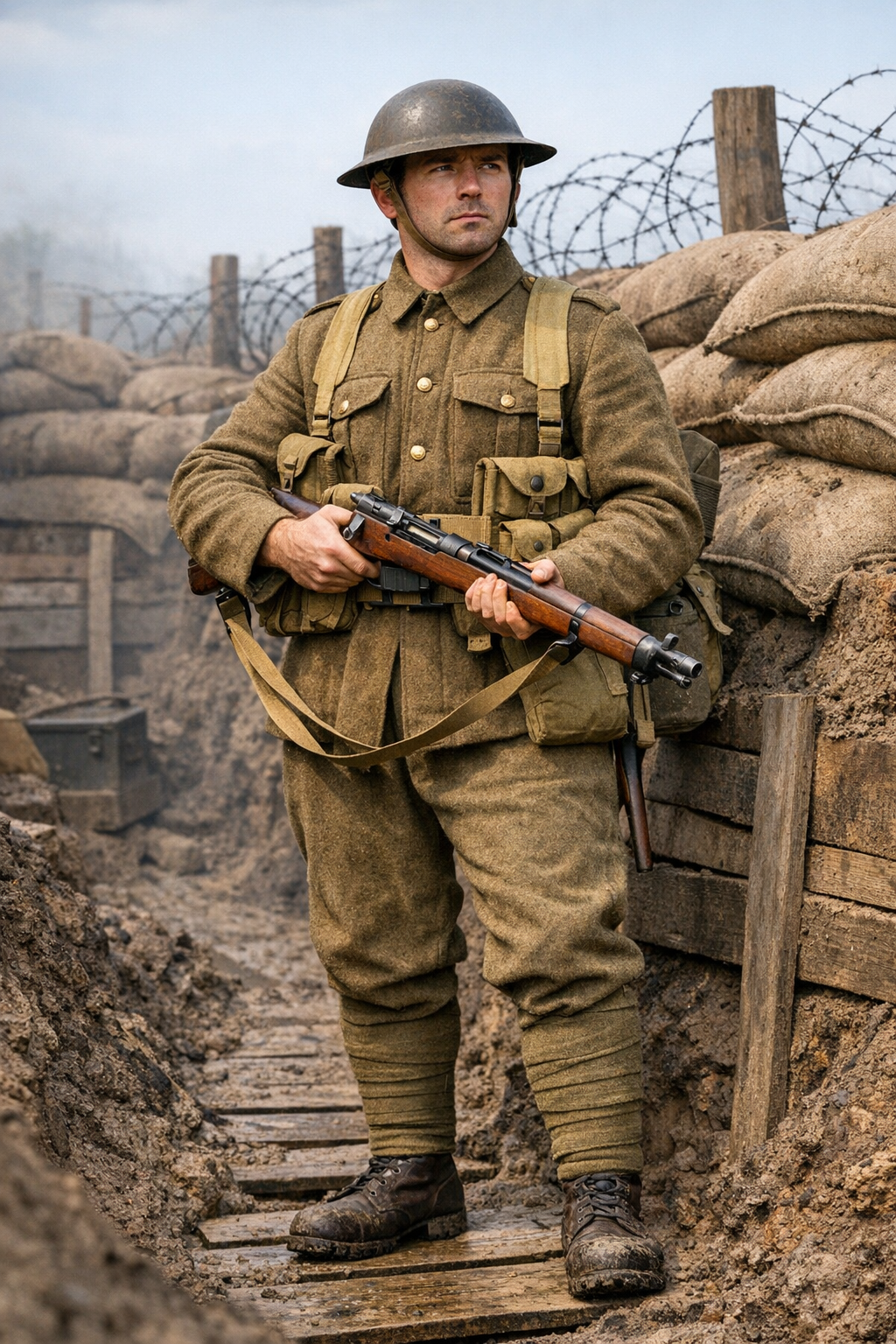
The WW1 British tunic was made from coarse wool serge. It had four front pockets, a stand-and-fall collar, and reinforced seams. Officers often tailored theirs, while enlisted men wore issue sizes. The wool kept warmth when dry but became heavy when wet. Still, it resisted sparks, tearing, and rough handling better than cotton.
Trousers
Service dress trousers matched the tunic fabric. They were worn high on the waist and supported by braces. Puttees wrapped from ankle to knee gave leg support and kept mud out of boots. This setup reduced sprains during long marches.
Boots and Footwear
Ammunition boots were ankle-high leather boots with hobnails and heel plates. They were hard-wearing but stiff. Poor drainage in trenches caused widespread trench foot, leading to regular boot inspections and sock changes.
1908 Pattern Webbing: Carrying the Load
The 1908 pattern webbing was one of the most successful pieces of British kit. Made from woven cotton webbing instead of leather, it resisted rot and weighed less when wet.
It included ammunition pouches, water bottle carrier, haversack, bayonet frog, and entrenching tool holder. The weight was spread across the shoulders and hips, reducing fatigue. Many historians credit the webbing system for improving endurance during long attacks like the Somme.
Brodie Helmet Impact
From Cloth Caps to Steel Protection
At the start of the war, British soldiers wore soft caps offering no protection. Shrapnel injuries were devastating. In 1915, the steel Brodie helmet was introduced.
Studies showed head wounds dropped sharply after adoption. The helmet’s wide brim deflected falling shrapnel, saving thousands of lives. It was simple, cheap to stamp, and easy to issue. By 1916, it was standard across the front.
The Brodie helmet became a lasting symbol of the WW1 British army uniform and influenced helmet design worldwide.
WW1 British Officer Uniform Differences
The WW1 British officer uniform followed the same basic pattern but allowed private purchase. Officers often chose finer cloth, open collars, and tailored cuts. They wore rank badges on cuffs and carried pistols instead of rifles.
While smarter in appearance, officer uniforms faced the same trench conditions. Many officers adopted enlisted webbing and steel helmets once combat realities became clear.
Pros and Cons for Reenactors and Collectors
Pros
The British WW1 uniform is durable and well documented. Surviving originals and photographs make accurate reproduction possible. Khaki serge ages well, and the webbing system is practical for living history events.
Cons
Heavy wool can be uncomfortable in hot climates. Authentic boots require breaking in. Webbing takes time to adjust correctly. Still, these drawbacks are part of the real experience.
Real-World Examples: Then and Now
During the Battle of the Somme in 1916, soldiers went over the top carrying over 60 pounds of equipment. The 1908 webbing helped distribute this weight, though early tunics tore under strain. Reinforced stitching later reduced failures.
Today, reenactors and collectors use reproduction WW1 British uniform sets for events, films, and displays. Many choose accurate replicas from paddelaters.com, which follow original patterns and materials. These reproductions allow safe use while preserving rare originals.
Authentic Replicas and Modern Use
Modern reproductions focus on correct cut, fabric weight, and hardware. Good replicas copy the shade of khaki, the weave of webbing, and the shape of the Brodie helmet. This matters for accuracy and comfort.
Reenactors appreciate that modern stitching is stronger, while still looking correct. Collectors value consistency across tunic, trousers, and gear. When sourced carefully, replicas provide a close feel of the original soldier’s kit.
FAQs
What did WW1 British soldiers wear?
They wore khaki wool service dress, 1908 webbing, ammunition boots, puttees, and later the Brodie helmet.
What is the 1902 pattern service dress?
It is the standard British field uniform introduced before WW1 and used throughout the war with updates.
Why was the Brodie helmet important?
It reduced head injuries from shrapnel and saved thousands of lives after 1915.
Was the uniform comfortable?
It was durable but heavy, especially when wet, and uncomfortable in heat.
Did officers wear different uniforms?
Yes, officers often bought tailored versions but used the same basic design.
Where can I buy reproduction WW1 British uniforms?
Quality replicas are available at paddelaters.com with historically accurate details.
Are replicas suitable for reenactment?
Yes, modern reproductions are safer and more practical than originals.
Conclusion: Why the British WW1 Uniform Still Matters
The British WW1 uniform tells a story of fast learning under pressure. Soldiers started the war poorly equipped for trench fighting, but through experience and adaptation, the army developed one of the most effective uniform systems of the conflict. The 1902 pattern service dress, 1908 pattern webbing, and Brodie helmet solved real problems faced by millions of men.
For reenactors and collectors today, this uniform offers a direct link to history. With accurate materials and patterns, modern replicas keep that history alive without risking fragile originals. If you are building a display, preparing for an event, or starting a collection, choosing a correct reproduction matters.
Explore authentic options and grab your replica at paddelaters.com to experience the British soldier’s kit as it was meant to be worn.
