PROTECTING FRENCH OFFICERS IN WW1: THE HORIZON BLUE UNIFORM AND ADRIAN HELMET
Introduction
Officers in the early days of World War I had a problem: they stood out too much. French officers in 1914 wore uniforms that, while striking, made them prime targets. With their bright red pants, shiny gold braid, and colorful hats, they were easily seen from a distance. But what happened when officers became the targets? Casualty rates soared, and by 1915, it was clear that something needed to change. Enter the horizon blue officer uniform and the Adrian helmet—a practical solution that not only saved lives but became iconic in military history. Let's dive into these key parts of the French WW1 officer uniform and explore how they transformed the battlefield for French soldiers and reenactors today.
Early Officer Uniform Issues
1914 Red Kepi and Gold Braid Risks
In the early days of WW1, French officers wore uniforms designed for display, not for practicality in the field. One of the most obvious features of the French officer uniform in 1914 was the kepi, the traditional military hat, which often featured gold braid and was made of bright colors. Officers also wore bright red pants, or pantalon garance, which looked impressive on parade grounds but were a serious risk in the trench warfare of World War I. In a time when the landscape of battle was dominated by mud, smoke, and gunfire, standing out made officers huge targets for snipers and enemy fire. It wasn't just that the uniforms were flashy—they were dangerous.
French officers in the trenches were not far behind their men in terms of exposure, yet they remained the focal point of enemy soldiers. A visible officer could be seen from miles away, and with the higher positions on the battlefield, they made easy targets for those looking to disrupt command. It didn’t take long for casualty rates to rise among the French officer class, especially in the early months of the war.
Horizon Blue Officer Upgrade
Adrian Helmet Details
In response to the mounting losses among French officers, the French military made a critical decision in 1915. They introduced a new, more practical uniform designed to blend into the battlefield rather than stand out. The new officer uniform was dubbed horizon blue—a color designed to blend in with the landscape of the Western Front. This uniform was far less conspicuous than the previous red pants and gold braid, offering much-needed camouflage.
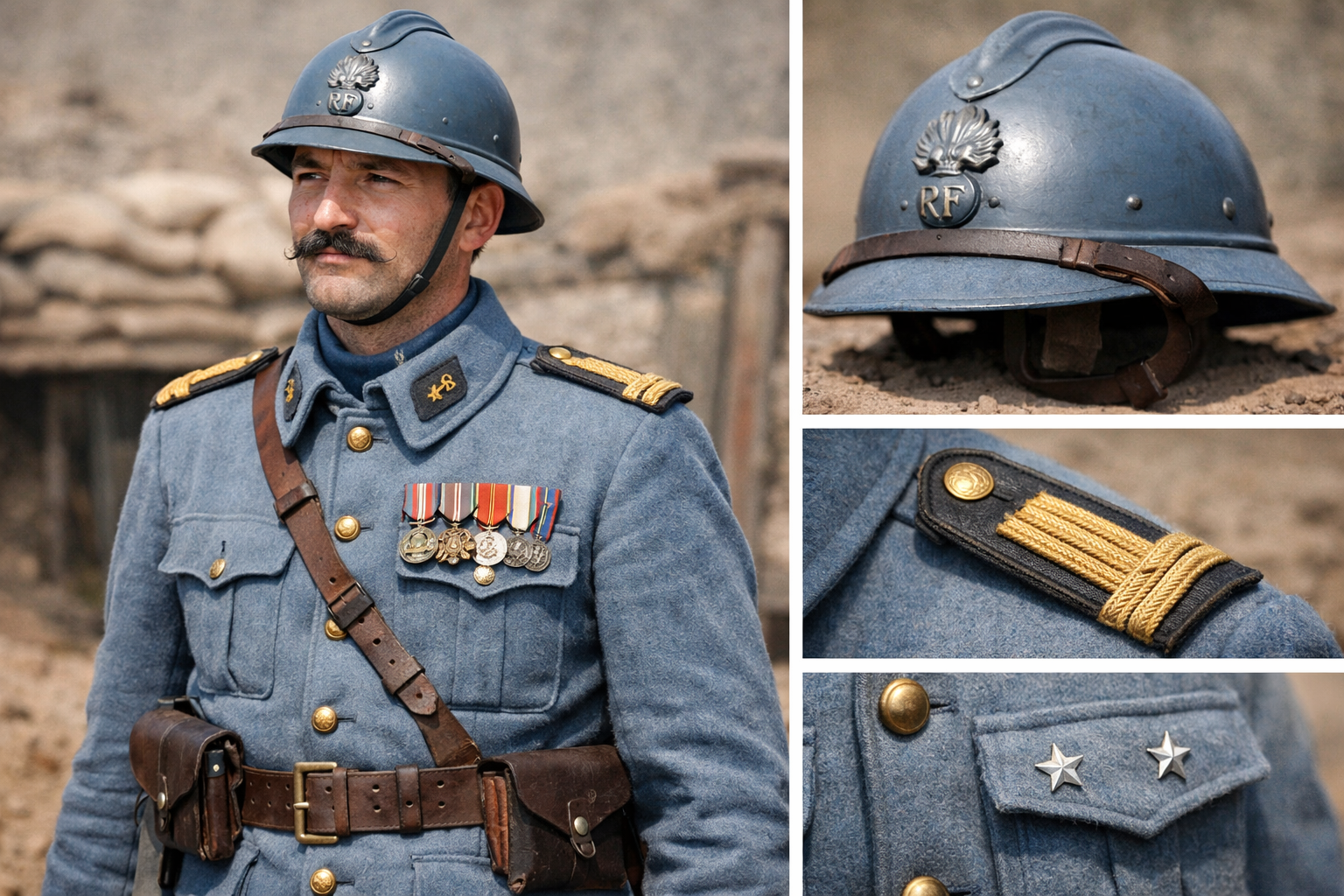
Alongside the new horizon blue tunic and trousers, the French military introduced a significant innovation: the Adrian helmet. The Adrian helmet M1915, made of steel and weighing approximately 435 grams (0.95mm thick), became the standard headgear for French soldiers, including officers. Unlike the earlier, more decorative helmets, the Adrian helmet was designed for protection. Its simple, rounded shape provided better coverage against shrapnel, and it came in a distinctive blue-gray color to match the horizon blue uniform. The helmet’s design also featured a raised crest, which helped deflect shrapnel and other debris.
For officers, this helmet proved to be a crucial change. Instead of the flashy hats that made them prime targets, the Adrian helmet offered the protection needed for officers to stay safe and stay in command. The combination of horizon blue uniforms and Adrian helmets allowed officers to blend in more effectively, reducing their visibility and, thus, their risk of being targeted.
Uniform Parts Breakdown
The horizon blue uniform introduced in 1915 was a significant departure from the bright colors and embellishments of previous French military dress. French officers were now outfitted in blue-gray tunics and matching trousers, designed with practicality in mind.
The key parts of the French WW1 officer uniform included:
-
Tunic: Made from wool, the officer tunic was blue-gray and designed to offer durability and comfort in the harsh conditions of trench warfare.
-
Trousers: The trousers, also in horizon blue, were designed to match the tunic and provide a unified, subdued look on the battlefield.
-
Boots: Standard-issue black leather boots were worn by officers, offering better protection and mobility than the earlier, more decorative footwear.
Main Features of French WW1 Officer Gear
French officers wore distinct gear that helped identify their rank while maintaining the practical needs of trench warfare. Here are some of the most notable features of their uniforms:
-
Shoulder Marks: Unlike enlisted soldiers, officers wore distinctive shoulder marks to indicate their rank. The color and design of these shoulder marks varied, with higher-ranking officers having more intricate designs.
-
Pants: The red pants of 1914 were phased out in favor of horizon blue trousers that offered better camouflage and didn’t make the officer stand out as easily.
-
Belt and Equipment: Officers typically carried their own set of equipment, including a belt, sidearm, and sometimes a sword. This was in addition to the standard infantry equipment like a rifle or pistol.
Pros & Cons for Reenactors
If you're thinking about stepping into the boots of a French WW1 officer for reenactment, you’ll want to consider both the pros and cons of these historically accurate uniforms and gear.
Pros:
-
Authenticity: Wearing a horizon blue officer uniform and Adrian helmet brings historical accuracy to life. The blue uniform and helmet are iconic and immediately recognizable, making them a great choice for serious reenactors.
-
Comfort: The wool tunic and trousers are designed for movement, making them much more practical than the earlier uniforms. The Adrian helmet, though heavy compared to modern helmets, provides better protection and is more comfortable than earlier headgear.
-
Visual Impact: The horizon blue uniform has a more muted and realistic aesthetic, offering a balanced look compared to the flashy red pants and decorative hats of the early war years.
Cons:
-
Weight of the Helmet: The Adrian helmet, while functional, can be heavy for extended periods. For reenactors, this may become uncomfortable during long events.
-
Cost: High-quality replicas of French WW1 officer uniforms and Adrian helmets can be expensive. However, buying from a reputable source like paddelaters.com ensures you’re getting the best for your investment.
-
Fit: Depending on body type, finding the right fit for the uniform can take some time. It’s important to ensure your gear is tailored to your size for the best reenactment experience.
Real-World Examples
Case Studies: 1916 Somme Officers’ Lower Visibility Aided Command
A perfect example of the horizon blue uniform and Adrian helmet saving officers’ lives occurred during the Battle of the Somme in 1916. Officers with the new, more camouflaged uniforms had a distinct advantage in staying out of enemy sight, allowing them to command more effectively and stay alive longer.
Modern reenactments often use replicas of these uniforms and helmets to ensure authenticity. Organizations and individuals who participate in WW1 reenactments find that using the horizon blue uniform and Adrian helmet helps tell a more accurate story of the soldiers who fought during the war.
FAQs
1. What ranks had gold vs silver on Adrian helmets?
Gold was typically used for higher-ranking officers, such as captains and above, while silver was used for lower-ranking officers.
2. How can I authenticate officer shoulder marks?
Authentic officer shoulder marks should match the rank and position of the officer, typically made from gold or silver thread, and display the correct military insignia for the period.
3. What was the Adrian helmet’s main purpose?
The Adrian helmet was primarily designed for protection against shrapnel and other battlefield debris, offering better safety than earlier headgear.
4. How accurate are paddelaters.com replicas?
Paddelaters.com offers some of the most authentic WW1 officer uniform replicas available, using the correct fabrics, colors, and details to bring history to life.
5. Did French officers wear the horizon blue uniforms throughout the entire war?
Yes, the horizon blue uniforms were introduced in 1915 and became the standard for French officers throughout the rest of the war.
Conclusion
The introduction of the horizon blue uniform and Adrian helmet saved French officers during one of the deadliest conflicts in history. These practical and effective pieces of gear transformed the French military's officer corps, reducing their visibility and, ultimately, saving lives. If you're a reenactor or collector, investing in these historically accurate uniforms and helmets from paddelaters.com will ensure you’re outfitted with the best replicas available today. Ready to bring history to life? Check out paddelaters.com for the perfect French WW1 officer uniform.
