STEP INTO HISTORY: THE BRITISH WW1 KHAKI TUNIC & 1908 PATTERN WEBBING
Introduction: The Harsh Reality of Trench Warfare
Imagine yourself in a muddy trench, surrounded by barbed wire and constant gunfire. The enemy is just a few hundred yards away, and you're stuck in the elements, day in and day out. You're wearing a uniform that was originally designed to look sharp but isn’t necessarily suited for the grueling conditions of trench warfare.
This was the harsh reality for British soldiers at the onset of World War 1. Early in the war, soldiers found their uniforms didn’t quite meet the demands of the battlefield. But over time, the British military adapted, leading to the introduction of key components like the khaki service dress tunic and the 1908 pattern webbing. These pieces were vital for survival, and they’ve since become iconic symbols of the war.
In this post, we'll take a deep dive into these two essential parts of the British soldier's kit, exploring their history, design features, and why they’re still popular with reenactors and collectors today.
Early War Struggles
When the British Expeditionary Force (BEF) first landed in France in 1914, soldiers were still equipped with uniforms designed for the previous century. The woolen tunics and heavy leather gear were ill-suited for the wet, muddy conditions of the trenches. Soldiers had to deal with discomfort, inefficiency, and a lack of proper protection.
One of the most significant issues was the color of the uniforms. Early in the war, British soldiers were wearing red or dark blue uniforms, which were easily visible against the backdrop of the muddy, drab landscape. This made them prime targets for enemy fire.
By 1902, however, the British Army started to recognize the need for a more practical solution. The decision was made to replace the bright colors with khaki, a color that blended in better with the terrain. This was a significant step forward in terms of practicality and camouflage, and the khaki service dress tunic became the standard.
The Khaki Tunic Fix
The khaki service dress tunic was officially introduced to the British Army in 1902, but it became the standard for World War 1 after the outbreak of hostilities in 1914. While it wasn’t perfect, it was a vast improvement over the earlier uniforms. Here's a closer look at why the tunic became so essential:
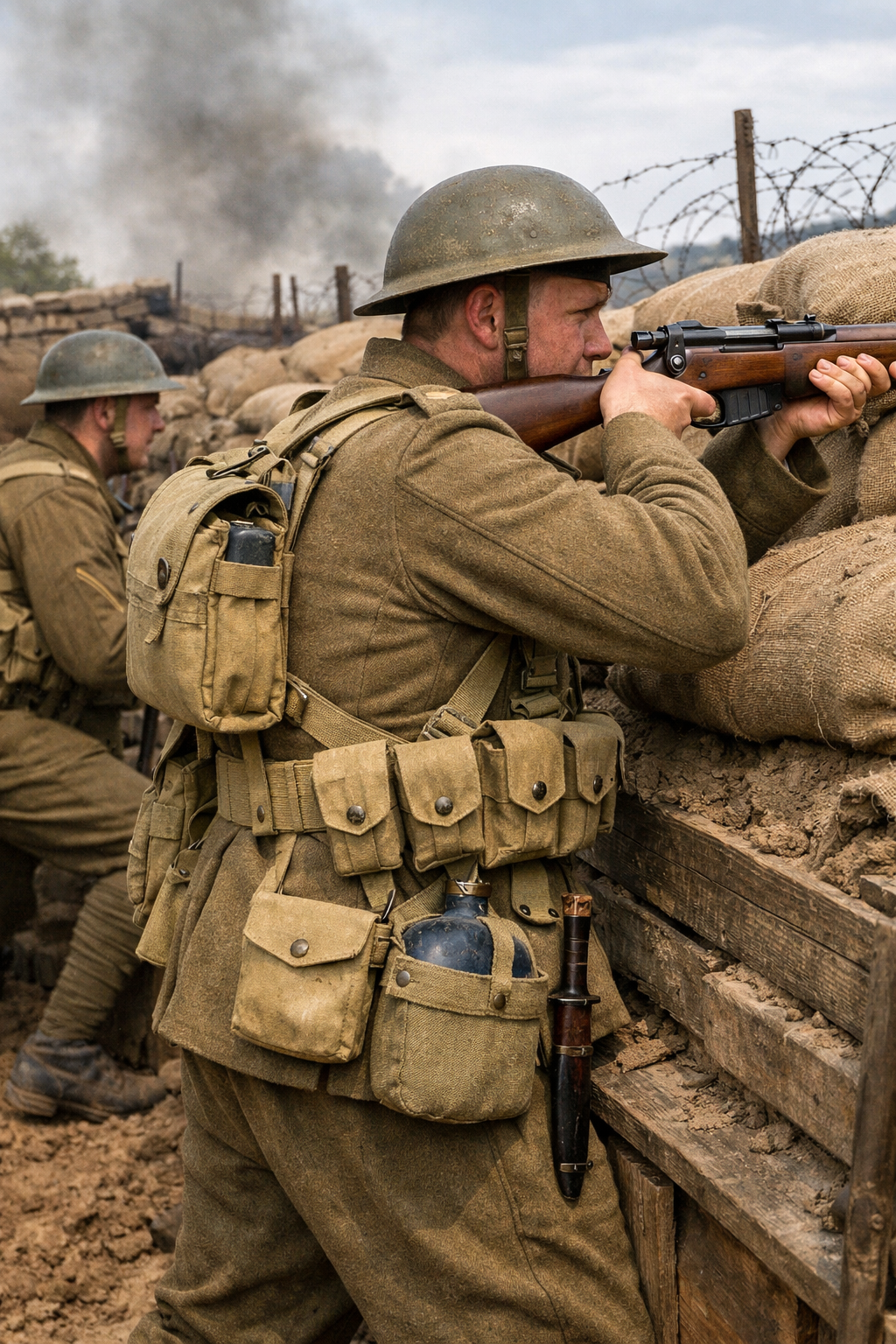
Key Features Up Close
The khaki service dress tunic was made from a durable wool fabric, chosen for its warmth and moisture-wicking properties. It was a practical solution to the cold, wet conditions in the trenches. The tunic featured a simple, military-cut design, with a single-breasted front and large, military-style pockets for storing small items. The color, a light brownish-green, helped soldiers blend into the natural environment, offering some protection from enemy observation.
Other notable features included:
-
Buttons: Brass buttons with the Crown and Garter insignia, each representing a symbol of British military tradition.
-
Collar: The collar was high and stiff, giving a sharp military appearance while offering protection against the cold.
-
Cuffs and Epaulettes: Military rank was displayed through epaulettes, which were attached to the shoulders. Cuffs were simple, with a straight-cut design.
-
Fit and Comfort: Though not as breathable as modern materials, the wool fabric was sturdy and could be worn through various weather conditions, providing a degree of warmth and comfort. However, it wasn’t as lightweight as modern gear.
The 1908 Pattern Webbing: Essential Gear for Soldiers
The 1908 Pattern Webbing was another essential component of the British soldier’s kit. This webbing system was used to carry ammunition pouches, water bottles, and other crucial equipment. Unlike earlier leather gear, the 1908 pattern was made from canvas, which was lighter and more practical in terms of mobility.
Key Features of the 1908 Pattern Webbing
-
Cartridge Pouches: The most important part of the webbing system, these pouches were designed to carry 200 rounds of ammunition, distributed across two large pouches, each able to hold 100 rounds.
-
Belt and Shoulder Straps: The 1908 pattern webbing featured a waist belt with shoulder straps, helping distribute the weight of the gear more evenly across the soldier's body.
-
Water Bottle and Bayonet Frog: Soldiers could carry their essential water bottle and bayonet with them, with specific pouches and frog attachments designed for these items.
-
Construction: Made from tough, durable canvas, the webbing was designed to withstand the harsh conditions of trench warfare. However, the design wasn’t always perfect, with some issues like wear and tear over time and difficulty in adjusting the webbing for different body sizes.
Webbing Specifications
-
Cartridge pouches dimensions: Roughly 6.5 inches by 4.5 inches per pouch.
-
Belt width: 2 inches (a standard width, adjustable for different waist sizes).
-
Total weight: Around 5 to 7 pounds when fully loaded, depending on the specific configuration.
Pros & Cons of the Tunic and Webbing
Pros of the Khaki Tunic:
-
Durability: The wool fabric stood up well to the harsh conditions of trench life, offering warmth and moisture resistance.
-
Camouflage: The khaki color was much more effective at blending into the environment than previous uniforms.
-
Practicality: Despite being slightly bulky, the tunic offered a balance of protection and flexibility for soldiers.
Cons of the Khaki Tunic:
-
Weight: In wet conditions, the tunic could become heavy and uncomfortable.
-
Fit: The tunic's fit could vary, and it was sometimes difficult to adjust, especially when wearing multiple layers underneath.
Pros of the 1908 Webbing:
-
Functional: The webbing allowed soldiers to carry everything they needed, from ammunition to water, without relying on a bulky backpack.
-
Durable: The canvas construction made it more weather-resistant than previous leather alternatives.
Cons of the 1908 Webbing:
-
Weight: Fully loaded, the webbing could become quite heavy, making it uncomfortable during long marches or extended stays in the trenches.
-
Limited Adjustability: Some soldiers found it challenging to adjust the webbing for a comfortable fit, especially if they were smaller or larger than average.
Real-World Examples: How They Worked in the Trenches
Reenactors often focus on the realism of their uniform choices, and the khaki service dress tunic and 1908 pattern webbing are essential to achieving an accurate representation of the British soldier during World War 1. These items are still heavily used in reenactments of major battles, such as the Battle of the Somme.
At the Somme, the combination of the khaki tunic and the 1908 webbing was a vital part of the soldier’s gear. Soldiers needed to move quickly, carry ammunition, and have immediate access to their water and bayonets. The khaki tunic provided protection and comfort while the 1908 webbing enabled them to carry everything they needed without extra weight slowing them down.
Real-World Reenactment: The Somme and Beyond
At events like the annual reenactment of the Battle of the Somme, collectors and history buffs use modern reproductions of these uniforms to accurately depict the conditions faced by British soldiers. These reenactments highlight the importance of having the right gear: the khaki tunic was essential for both protection and comfort, and the 1908 webbing ensured soldiers had their supplies close at hand.
Frequently Asked Questions
-
How do I size a WW1 British khaki tunic?
Sizing for a WW1 tunic is based on chest measurement, so it's important to take an accurate chest measurement in inches before purchasing. The tunic should fit snugly with room for layers underneath. -
Is the 1908 webbing adjustable?
Yes, the 1908 webbing has some adjustability, particularly with the belt and shoulder straps. However, the fit can be a bit tricky for soldiers of different body types. -
What was the original fabric of the khaki tunic?
The original khaki tunic was made from a wool serge fabric, which provided warmth and durability. -
Was the webbing used in other wars?
While the 1908 pattern webbing was standard during WW1, it was also used in the early part of WW2 before being replaced with new designs. -
How can I care for my WW1 uniform reproduction?
It’s important to clean your tunic and webbing according to the manufacturer's instructions, generally by hand washing or spot cleaning to maintain the fabric.
Conclusion: Why Modern Reproductions Matter
Whether you’re a reenactor or a collector, owning a reproduction of the khaki service dress tunic and 1908 pattern webbing allows you to step into the shoes of the British soldier during World War 1. These uniforms weren’t just pieces of clothing—they were tools for survival. With modern reproductions, you can experience the reality of trench warfare while ensuring accuracy and durability. So, if you're looking for top-notch reproductions, check out paddelaters.com for the best WW1 gear.
