TRENCHES AND HOSPITALS: HOW BRITISH UNIFORMS ADAPTED IN WW1
Introduction: The Problem Soldiers and Nurses Faced
World War One pushed people into conditions no army or medical service had faced before. British soldiers lived for weeks in wet trenches. British nurses worked long hours around mud, blood, and infection. Early uniforms were not designed for this kind of war. Soldiers suffered trench foot, lice, and cold injuries. Nurses dealt with contamination, poor hygiene, and physical exhaustion. Clothing was not a small issue. It affected survival, health, and daily work. Over time, the British Army and medical services adapted uniforms to solve real problems on the ground. This article looks at how those uniforms worked, using facts, specifications, and real cases from the war.
Key Features of WW1 British Soldier Uniforms
Everyday Service Dress Breakdown
The standard British soldier uniform at the start of WW1 was the 1902 Pattern Service Dress. It was made from khaki wool serge. Records held by the Imperial War Museum show the cloth weight averaged around 18 to 20 oz per square yard. This weight balanced warmth with movement. The color khaki reduced visibility compared to earlier red uniforms.
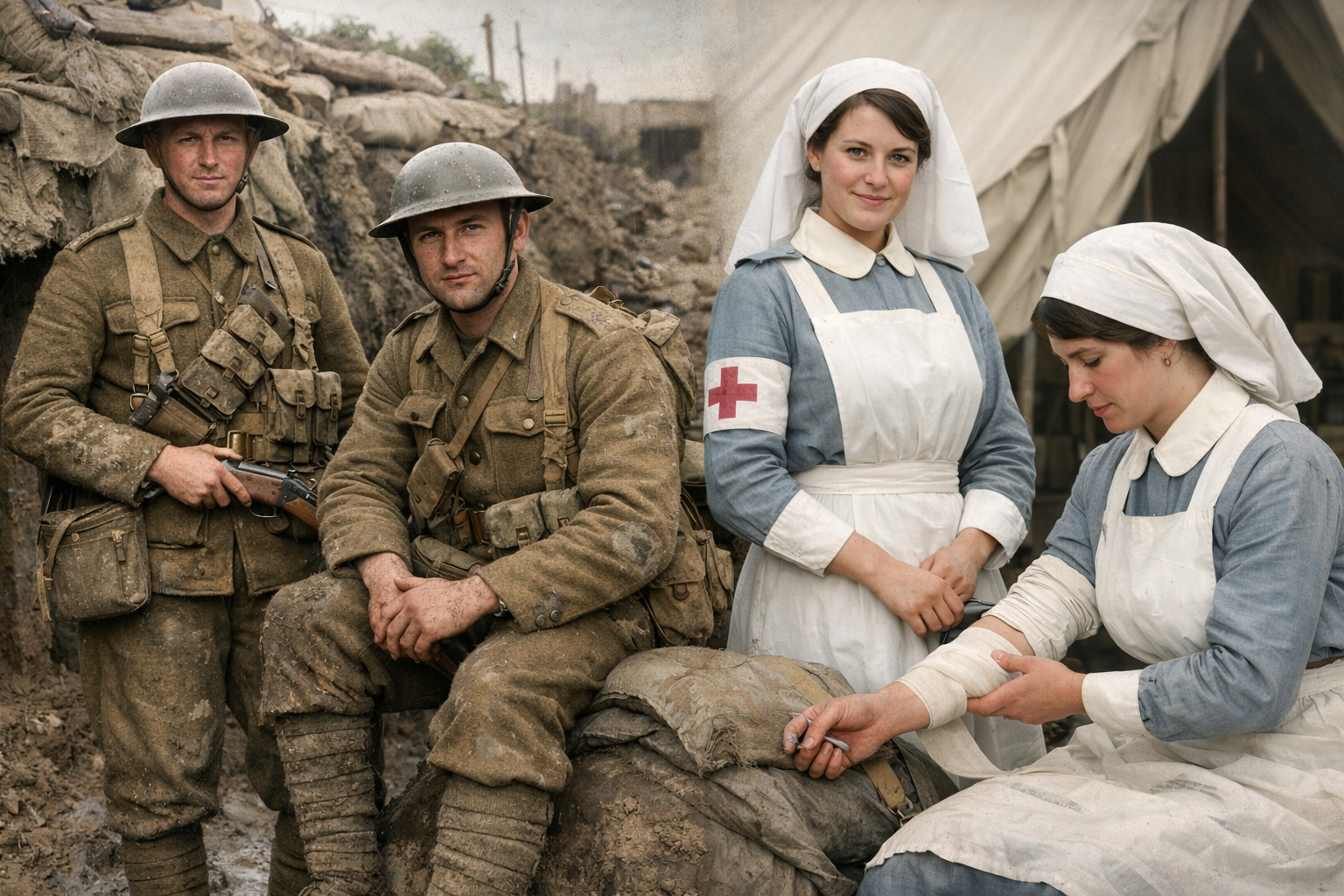
The uniform included a tunic with four pockets, straight-cut trousers, and puttees wrapped around the lower legs. Soldiers wore leather ankle boots with hobnails. Headgear was the soft Service Dress cap early on, later replaced by the steel Brodie helmet in 1916. Each item had a reason. Pockets carried maps, rations, and letters. Puttees supported ankles during long marches.
At the Battle of the Somme in 1916, British infantry wore this service dress under heavy shelling and constant rain. Letters from soldiers describe uniforms becoming stiff with mud but still providing basic warmth. Wool retained heat even when wet, which reduced cold shock compared to cotton clothing.
Trench Adaptations and Gear
Trench warfare forced changes. Soldiers added extra layers like wool undershirts and knitted socks. Trench boots, introduced in 1917, had wider soles and better waterproofing. Grease was issued to reduce trench foot risk. The steel Brodie helmet protected against shrapnel, which caused most head injuries.
Equipment also mattered. Webbing sets carried ammunition, water bottles, and gas masks. The Small Box Respirator became standard after gas attacks in 1915. Uniform design now worked as part of a system, not just clothing. Survival rates improved as these adaptations spread across units.
WW1 British Nurses Uniforms: Design and Daily Use
British nurses, including those from the Voluntary Aid Detachment, wore uniforms designed for hygiene and authority. A typical nurse uniform included a cotton or linen dress, a white apron, cuffs, and a veil. Unlike soldier uniforms, nurse clothing focused on cleanliness and ease of washing.
Hospital records show uniforms were boiled regularly to reduce infection. White fabric made dirt and blood visible, forcing frequent changes. Nurses worked in field hospitals near the front, often under shellfire. Their uniforms had to allow fast movement during long shifts.
VAD nurse diaries from 1915 describe working 12 to 16 hours a day. The uniform was simple but practical. Loose sleeves allowed arm movement. Aprons protected the main dress. Veils kept hair controlled and reduced contamination. The design reduced infection spread at a time when antibiotics did not exist.
Pros & Cons Based on Historical Accounts
British uniforms had clear strengths. Wool service dress kept soldiers warm in cold trenches. Khaki reduced visibility. Steel helmets saved lives. Nurse uniforms supported hygiene and discipline in hospitals.
There were limits. Wool became heavy when soaked. Early boots lacked proper waterproofing. Puttees trapped mud and moisture. Nurses faced heat stress in summer hospitals and cold wards in winter. Uniforms helped, but they could not fully solve the harsh conditions of industrial war.
Medical reports from 1916 show trench foot cases dropped after better boots and socks were issued. This proves uniform changes had real effects. At the same time, letters complain about lice and damp clothing, showing ongoing problems.
Real-World Examples and Case Studies
Pros in Action
During the Battle of the Somme, British casualty figures were extreme. Yet medical data shows survival improved when wounded soldiers reached aid stations quickly. Uniform features helped. Pockets carried first-aid dressings. Webbing allowed stretcher bearers to move equipment fast.
In military hospitals in France, nurse uniforms reduced cross-infection. Records show lower infection rates in units with strict uniform hygiene rules. This mattered when wounds were dirty and antibiotics were unavailable.
Modern collectors studying original garments note wear patterns that match these accounts. Reinforced elbows, stretched pockets, and repaired seams show how uniforms were used daily. These details guide accurate modern replicas for reenactors and museums.
FAQs
What fabric was used for WW1 British soldier uniforms?
Most were made from wool serge, around 18–20 oz per square yard.
Why were British uniforms khaki?
Khaki reduced visibility compared to bright colors, improving camouflage.
What helmet did British soldiers use in WW1?
The Brodie steel helmet was introduced in 1916 to protect against shrapnel.
What did WW1 British nurses wear?
Cotton or linen dresses with white aprons, cuffs, and veils for hygiene.
Did uniforms really reduce injuries?
Yes. Helmets lowered head wounds, and better boots reduced trench foot.
Were nurse uniforms different at the front?
Yes. Field hospitals used simpler, more washable designs than base hospitals.
Conclusion: The Solution and Why It Still Matters
WW1 British uniforms were not perfect, but they evolved to meet real needs. Soldiers needed warmth, protection, and mobility. Nurses needed hygiene, authority, and endurance. Through trial, error, and frontline feedback, uniforms changed and saved lives. Today, accurate replicas matter for collectors, educators, and reenactors. Authentic materials, correct patterns, and proper construction help preserve this history. Understanding how these uniforms worked in real conditions adds value beyond appearance. It connects modern audiences to the lived experience of the First World War.
