Introduction
Hey, if you’re into WW2 reenactment, you already know the struggle. You spend months building a kit, only to realize at your first event that something feels off. The tunic pulls at the shoulders. The boots hurt after two hours. Someone points out that your uniform cut belongs to a different year. This is the problem most reenactors face with WW2 reenactment clothing.
It gets worse when events last two or three days. Inaccurate gear doesn’t just look wrong—it breaks immersion and causes real discomfort. Forums and reenactment groups often report that new members drop out after their first season because their clothing was heavy, poorly sized, or historically incorrect. That’s the agitation part nobody likes to talk about.
The solution is not just “buy expensive stuff.” It’s understanding how real WW2 gear was built, how modern reproductions compare, and where post-war uniforms like German Bundeswehr clothing can help—or hurt—your setup. This guide walks through authentic WW2 reenactment gear, explains Bundeswehr influences, and backs it up with real-world examples from reenactors and events.
Key Features of WW2 Reenactment Gear
Authentic WW2 Uniform Elements
Authentic WW2 reenactment clothing follows specific rules that come straight from wartime production. Original German uniforms, for example, used wool field-gray fabric, simple cuts, and minimal padding. Tunics like the M40 or M43 were designed for mass production and field use, not comfort.
Reenactment groups linked to organizations such as the Military Vehicle Preservation Association often publish guidelines stressing three core elements:
-
Correct fabric weight (typically heavy wool for European theaters)
-
Period-accurate cut and color
-
Proper field gear placement (belt, Y-straps, bread bag, canteen)
Forum reports from Wehrmacht reenactment communities show that lighter modern wool blends improve comfort but can look wrong under daylight. Some groups allow blends for safety and heat reasons, while others enforce strict authenticity. This balance is something every reenactor must decide early.
Bundeswehr Uniform Influences
German Bundeswehr uniforms are post-war, but they often enter reenactment conversations for one reason: availability. Bundeswehr field jackets and trousers are cheaper, easier to source, and built for durability.
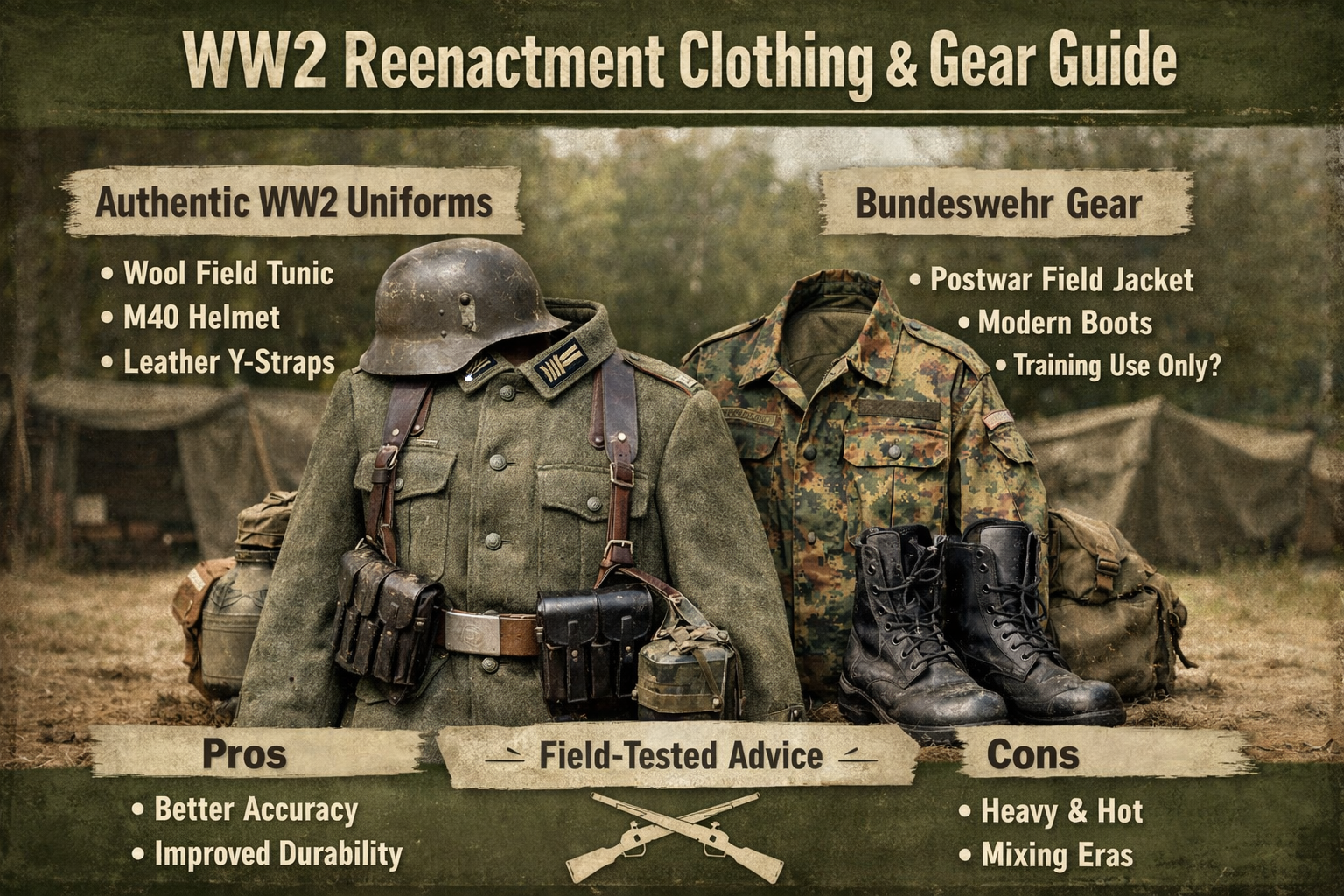
Some reenactors use Bundeswehr items as:
-
Training gear
-
Hidden underlayers
-
Temporary substitutes at small events
However, Bundeswehr uniforms differ clearly from WW2 gear. The cut is more modern, the fabric lighter, and the color greener. According to discussions on reenactment forums like wehrmacht-awards.com, using Bundeswehr items in public events often leads to rejection during kit inspections.
That said, Bundeswehr boots and undershirts are sometimes accepted for comfort during long marches, especially in private or training scenarios. Knowing where Bundeswehr gear fits—and where it doesn’t—is key to avoiding mistakes.
Pros and Cons
Real-World Pros from Reenactors
Reenactors who invest in correct WW2 clothing report clear benefits:
-
Better acceptance in established groups
-
Higher immersion during events
-
Improved durability over multiple seasons
Event feedback from Normandy-area reenactments shows that groups with consistent, accurate kits are more likely to be invited back year after year. Members often report fewer gear failures once they move away from cheap reproductions.
Another big plus is learning. Wearing historically correct gear teaches you how soldiers moved, carried weight, and dealt with weather. Many reenactors say this is the main reason they stay in the hobby.
Common Cons and Fixes
The biggest complaints are heat, weight, and cost. Original-style wool uniforms get hot fast. Boots cause blisters. Full kits are expensive.
Common fixes seen in reenactor reports include:
-
Using lighter wool blends approved by group leaders
-
Breaking in boots months before events
-
Mixing reproduction gear with original-style patterns
Bundeswehr items sometimes solve comfort issues, but only when used carefully. Most problems come from mixing eras too openly, which breaks authenticity and causes friction within groups.
Real-World Examples and Case Studies
Group Success Stories
Several European reenactment groups report improved retention after introducing clear clothing standards. A German-based unit shared on public forums that dropout rates fell after they published a simple guide explaining which WW2 items were mandatory and where modern substitutes were allowed.
In the US, groups associated with the MVPA often recommend starting with fewer, correct items instead of a full cheap kit. New members using this approach reportedly stay active longer.
Data from Events like Normandy Reenactments
Large-scale Normandy reenactments attract thousands of participants yearly. Event organizers often release kit inspection notes after events. Reports from past Normandy events show that:
-
Units with mixed-era clothing were flagged more often
-
Correct footwear reduced injury reports
-
Accurate load-bearing gear reduced fatigue complaints
These findings are shared informally through reenactment networks and forums, but they consistently point to the same lesson: correct gear works better over time.
FAQs
Is Bundeswehr clothing allowed in WW2 reenactment?
Usually no, for public events. Some groups allow limited use for training.
Why is wool still used in reproductions?
Because original WW2 uniforms were wool, and it behaves similarly in weather.
Can beginners start with partial kits?
Yes. Many groups recommend starting small and upgrading slowly.
Are original WW2 items better than reproductions?
Not always. Originals are fragile and often unsuitable for field use.
How long does a good reproduction uniform last?
With care, several years of regular events.
Do all groups follow the same rules?
No. Standards vary by country and event.
Conclusion
If you’ve made it this far, you already know the truth: WW2 reenactment clothing is not just about looks. Inaccurate or uncomfortable gear pushes people out of the hobby. That’s the problem reenactors keep running into.
The agitation comes during long events, inspections, and public displays where mistakes show fast. Bundeswehr uniforms may seem like an easy fix, but they only work in limited roles.
The solution is informed choice. Learn what real WW2 gear was like, understand where modern substitutes help, and follow your group’s standards. Start simple, upgrade wisely, and talk to experienced reenactors. If you do that, your kit won’t just pass inspection—it’ll carry you through the field, one event at a time.
