WHAT WORKED AND WHAT DIDN’T: WWII U.S. ARMY UNIFORMS
Published on Feb 07, 2026
Introduction (PAS Problem Teaser)
World War II pushed soldiers into places and situations their uniforms were never fully ready for at first. Cold winters, wet beaches, jungle heat, and long marches exposed every weakness in what troops wore. A uniform was not just clothing. It was protection, storage, and sometimes the difference between staying effective and being pulled off the line.
Before WWII, the U.S. Army still relied on ideas shaped by earlier wars. Wool serge uniforms worked fine in cool weather but soaked up water and dried slowly. Boots blistered feet on long marches. Jackets lacked layers. Helmets offered limited protection before design upgrades. These problems were not new. They showed up in World War I and appeared again later in Korea.
That pressure forced change. The U.S. military responded with better materials, smarter layering, and standardized production at massive scale. By 1945, around 15 million olive drab uniforms had been produced. The goal was simple: keep soldiers functional in real combat, not just looking correct on parade.
This article walks through that journey. We’ll start with what WWII American uniforms were made of and how they evolved. Then we’ll step back to see what went wrong in World War I and what Korea later taught. Finally, we’ll look at real combat use and why these uniforms mattered.
Key Features of WWII American Uniforms
WWII American uniforms focused on function first. Most enlisted men wore olive drab (OD) wool uniforms early in the war. The standard wool serge fabric weighed about 18–20 ounces per yard. It was durable and warm but heavy when wet. That mattered in rain, snow, and amphibious landings.
To fix layering issues, the U.S. introduced the M1943 field jacket. It was made from tightly woven cotton sateen treated for water resistance. It had four large pockets, a built-in hood, and room to layer liners underneath. This design allowed one outer shell to work in different climates. Soldiers could add or remove layers instead of switching full uniforms.
Helmets improved too. The M1 helmet, introduced in 1941, used a steel shell with a separate liner. It could stop shrapnel and reduce head injuries. Medical reports later showed a clear drop in fatal head wounds compared to earlier helmet designs.
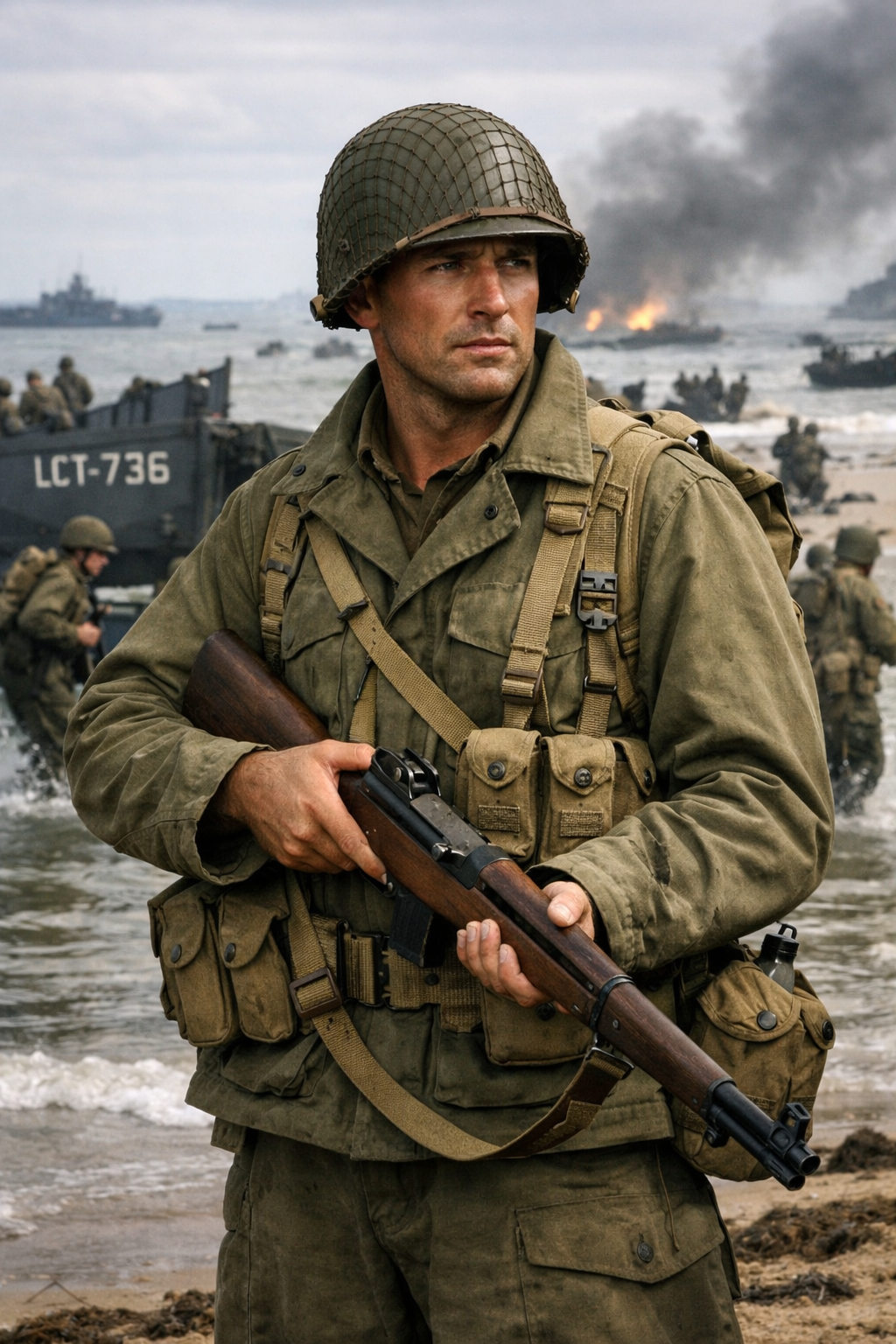
Footwear evolved through trial and error. Early war service shoes with canvas leggings caused ankle problems. Later, double-buckle combat boots combined both into one item, saving time and reducing foot strain.
By standardizing designs, the U.S. could mass-produce gear fast. Factories across the country turned out uniforms, helmets, and boots in the millions. That scale meant replacements were available, which mattered when gear wore out quickly in combat zones.
WW1 Uniforms: The Problems They Faced
World War I uniforms showed what not to repeat. Soldiers wore thick wool tunics and trousers with limited ventilation. In wet trenches, wool stayed damp for days. This led to trench foot and skin infections.
Helmets like the early British and U.S. models offered basic coverage but limited shock absorption. Storage was poor. Soldiers carried gear in awkward packs that slowed movement.
These problems became case studies for WWII planners. Reports from WWI showed that soldiers lost effectiveness due to clothing issues, not just enemy action. WWII uniform designers aimed to reduce that loss.
Korean War Uniforms: Lessons Learned
The Korean War came after WWII, but it exposed gaps that WWII gear still had. Extreme cold caused frostbite on a large scale. Early WWII-style layering was not enough for sub-zero temperatures.
This led to improved cold-weather systems later on. The lesson was clear: climate-specific gear mattered. WWII uniforms were a big step forward, but Korea proved that constant updates were needed.
Pros and Cons in Real Combat
Pros:
WWII American uniforms were practical. The M1943 system allowed flexibility. Soldiers could adapt to weather instead of swapping full kits. The M1 helmet saved lives. Studies after the war linked helmet use to lower rates of fatal head injuries, especially from artillery fragments.
Uniform standardization also helped logistics. A damaged jacket could be replaced quickly. Spare parts were available across units. This kept soldiers in action longer.
Cons:
Wool serge still caused problems in wet climates. In the Pacific, wool was hot and uncomfortable. Cotton alternatives helped but wore out faster. Early boots caused foot injuries until improved designs were issued.
Another issue was fit. Mass production meant not every uniform fit every soldier well. Poor fit led to chafing and reduced comfort on long marches.
Despite these flaws, WWII uniforms performed better overall than earlier designs. They balanced durability, protection, and supply needs better than anything before them.
Real-World Examples from the Frontlines
During the Normandy landings in Normandy, soldiers faced cold water and heavy fire. Many uniforms soaked through during the landing. Wool layers became heavy, but the M1 helmet proved critical. Medical data from the European Theater showed helmet use reduced fatal head wounds by a significant margin compared to WWI-era forces.
In the Pacific campaign, cotton uniforms replaced wool more often. Soldiers fighting in jungle heat needed lighter gear. Field reports noted improved mobility and fewer heat-related issues once wool was phased out.
These examples show how uniforms directly affected survival and effectiveness, not just comfort.
FAQs
What fabric was most common in WWII U.S. uniforms?
Wool serge early in the war; cotton sateen later for field jackets.
How many WWII American uniforms were made?
About 15 million olive drab uniforms by 1945.
Why was the M1943 jacket important?
It allowed layering and worked in many climates.
Did helmets really save lives?
Yes. Medical reports showed fewer fatal head injuries with the M1 helmet.
Were WWII uniforms better than WWI uniforms?
Overall, yes. They were more flexible and better suited to combat needs.
Did WWII lessons affect later wars?
Yes. Korean War gear improved based on WWII successes and failures.
Conclusion
WWII American uniforms were a response to real problems. Earlier wars showed what failed. WWII designers listened, tested, and adjusted. The result was gear that worked better in mud, cold, heat, and combat.
Items like the M1943 field jacket and M1 helmet were not perfect, but they solved many issues soldiers faced. Production scale ensured supply. Design changes improved survival and efficiency.
If you’re a collector, reenactor, or history fan, understanding these uniforms means understanding the soldiers who wore them. Look closely at the details. Every pocket, fabric choice, and helmet curve came from hard lessons learned the long way.
