Introduction: The Challenges of British Army Uniforms in WW1
Imagine being a British soldier, or “Tommy,” slogging through the mud of Passchendaele in the brutal conditions of the Western Front. Clad in a khaki uniform, struggling to move in the damp, heavy wool, with a Brodie helmet perched on your head, you face constant danger from enemy fire and the harsh elements. The British Army, with over 8.9 million soldiers mobilized, suffered 744,000+ deaths, many of them due to conditions exacerbated by their uniforms.
In this post, we’ll explore the design of the WW1 British Army uniform, focusing on how it fared against the brutal trench conditions. We’ll also compare it with the uniforms of US forces and US Marines to see how the design of military wear evolved in response to the horrors of the battlefield.
The Problem: WW1 Trenches vs. British Troops
The conditions in the trenches were a nightmare—mud, rats, disease, and constant bombardment. A soldier’s uniform, meant to protect and keep him functional, instead often became a liability. The death toll for the British Army was staggering—over 744,000 soldiers perished during WW1, out of a total mobilization of 8.9 million. The trenches, soaked in rain and blood, were breeding grounds for infection, making it difficult for any uniform to provide true comfort or protection.
For British soldiers, the khaki Service Dress, introduced in 1902, was the primary uniform worn throughout the war. While it was practical for concealment in a natural environment, it was not without its flaws, particularly under the extreme conditions of trench warfare.
Agitating Issues: Uniform Weaknesses in Action
Khaki Mud Absorption Flaws
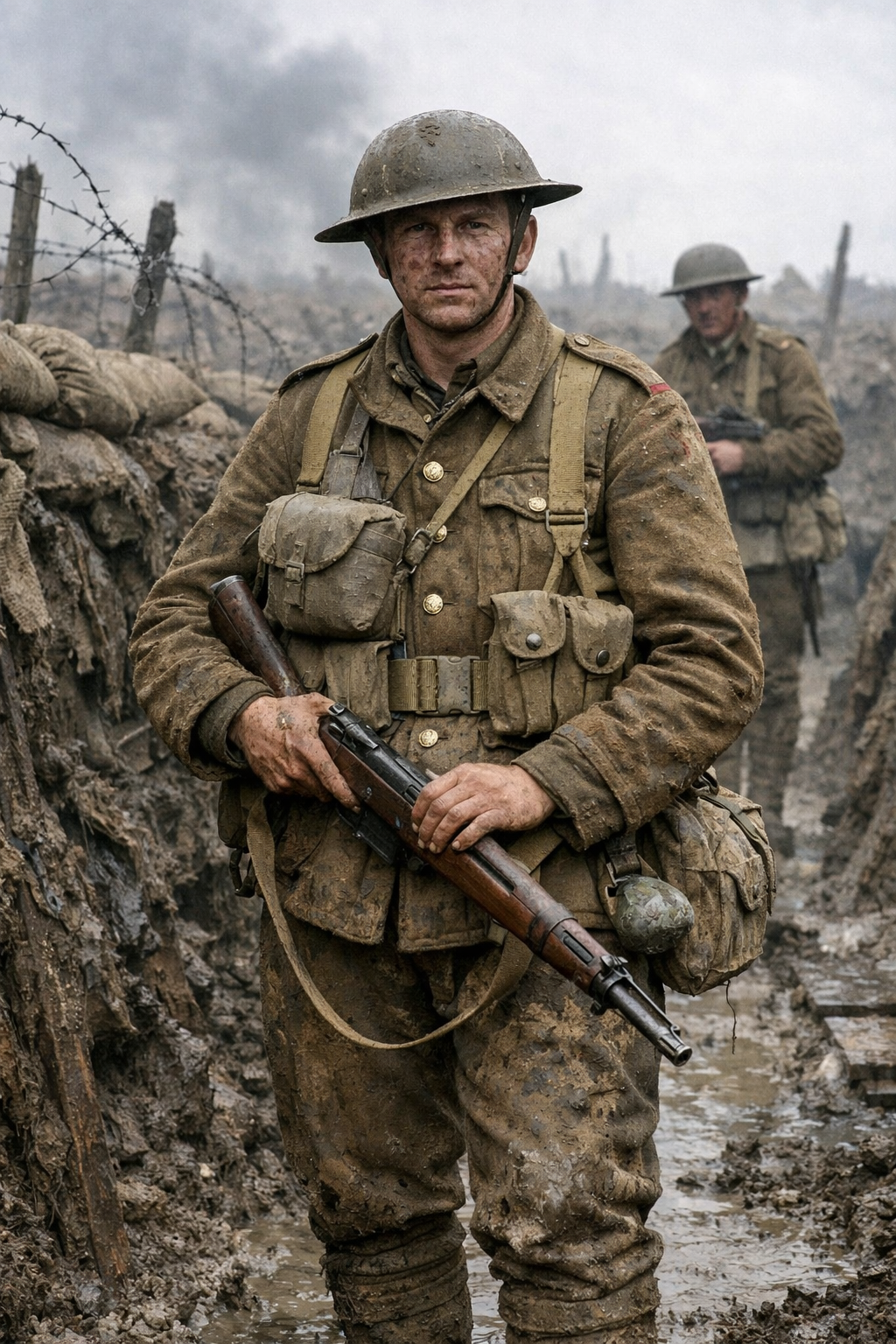
While the khaki color was an improvement over previous, brightly colored uniforms (which made soldiers easy targets), it had its own set of problems. The wool serge fabric absorbed mud and water easily, leaving soldiers drenched and uncomfortable for long periods. This absorption also contributed to the weight of the uniform, especially when soldiers had to spend hours standing in waterlogged trenches.
One of the most common complaints was the heaviness of the uniform when wet. With a tunic that featured five brass buttons, puttees that wrapped around the legs, and the Brodie helmet, the gear weighed around 3kg (~6.6 lbs). This weight added to the strain of moving through mud and difficult terrain.
Discomfort in Harsh Conditions
The wool serge fabric, although durable, was not breathable, which led to extreme discomfort during the sweltering summer months. Soldiers were often left with rashes or skin irritation from prolonged exposure to the material. Moreover, the tunic's design—though functional—was not as adaptable as modern uniforms, making it difficult to adjust to various climates and conditions.
Brodie Helmet’s Limitations
The Brodie helmet, introduced in 1916, was a significant improvement over the previous soft caps, offering better protection against shrapnel. However, the helmet’s shape was not ideal for prolonged wear. Its heavy weight, combined with the lack of ventilation, meant that soldiers would often experience neck strain or overheating in the trenches. It also did little to protect the face, leaving soldiers vulnerable to head injuries from explosive debris.
The Solution: Core Features of British WW1 Uniforms
Khaki Service Dress Breakdown
The khaki Service Dress, officially known as the “1914 Pattern” uniform, was made of wool serge, chosen for its durability and resistance to wear. The tunic had five buttons and a high collar, with a functional breast pocket and two lower pockets for carrying essential items like a field notebook or ammunition. The design was simple and straightforward, but its practicality was tested in the unforgiving environment of the trenches.
Features of the Khaki Service Dress:
-
Material: Wool serge, heavy and durable but prone to water absorption.
-
Tunic: Five buttons, breast pocket, and two lower pockets.
-
Puttees: Worn around the lower leg to prevent debris and dirt from entering the boots.
-
Color: Khaki, for camouflage in natural environments.
While the uniform did offer basic protection, its weight, moisture retention, and lack of adaptability proved to be significant shortcomings.
Brodie Helmet and Accessories
The Brodie helmet, introduced in response to the increasing number of head injuries from artillery and shrapnel, became a symbol of WW1 British soldiers. The steel helmet, with its characteristic rim, was designed to deflect shrapnel away from the soldier’s head. Though an improvement over the soft caps soldiers wore initially, the helmet still had its drawbacks in comfort and full protection.
Brodie Helmet Features:
-
Material: Steel, providing protection against shrapnel.
-
Shape: Wide brim to deflect debris, but limited facial protection.
-
Weight: Heavy, contributing to neck strain after prolonged use.
US Uniform Comparisons
When comparing the British WW1 uniform to the uniforms of the United States, it’s clear that each nation had its own approach to military wear. While the US Army wore olive-drab wool service uniforms, which were lighter than the British khaki serge, the US Marine Corps uniforms were quite different, featuring a blue wool service coat and breeches. Let’s break it down:
| Feature | British WW1 Uniform | US Army Uniform | US Marine Corps Uniform |
|---|---|---|---|
| Fabric | Wool Serge | Olive Drab Cotton | Blue Wool Service Coat |
| Helmet | Brodie Steel | No Standard Helmet | Steel Helmet (Later) |
| Weight | ~3kg | Lighter, approx. 2.5kg | Heavier, approx. 4kg |
| Camouflage | Khaki for concealment | Olive drab for concealment | Blue coat for ceremonial |
| Boots | Leather with puttees | Leather boots | Leather boots, breeches |
Pros/Cons of Each Uniform:
| Uniform | Pros | Cons |
|---|---|---|
| British | Camouflaged, durable material | Heavy, uncomfortable when wet, lack of breathability |
| US Army | Lighter, more breathable | Less durable fabric for trench conditions |
| US Marine Corps | Strong service coat, more formal | Not suited for trench warfare, more ceremonial |
Features List (Bullet Points):
-
Weight: Approximately 3kg (6.6 lbs) for full gear.
-
Gas Mask Integration: Included as part of essential gear.
-
Durability: Wool serge was durable but absorbed moisture easily.
-
Helmet: Brodie helmet, heavy but improved safety.
-
Trench Conditions: Designed for combat, but not ideal for wet or hot conditions.
-
Uniform Lifespan: Tended to deteriorate quickly under heavy use.
-
Pockets: Two large lower pockets for carrying ammunition and essentials.
-
Climate Adaptability: Limited adaptability to hot and wet conditions.
-
Boots and Puttees: Leather boots with wrapped puttees for leg protection.
Pros & Cons (Markdown Table):
| Pros | Cons |
|---|---|
| Durable wool material | Heavy, especially when wet |
| Khaki color for camouflage | Uncomfortable in extreme heat |
| Provides basic protection | Poor adaptation to trench mud |
| Brodie helmet offers head protection | Helmet can cause neck strain |
| Puttees offer leg protection | Difficult to wear for long hours |
Real-World Examples: Uniform Failures in Action
The Somme Offensive
During the Battle of the Somme, one of the largest and bloodiest battles of WW1, British soldiers experienced firsthand how ineffective the uniform could be in the harsh conditions. The constant exposure to rain, mud, and gas attacks proved overwhelming, and many soldiers struggled with discomfort, rashes, and fatigue caused by the wool serge fabric. The uniform’s weight became a significant burden as soldiers slogged through the muck.
US Marines at Belleau Wood
The US Marines’ blue wool service coats were more ceremonial than practical for the battle-hardened conditions of WW1. While they looked impressive during parades, they did little to protect the soldiers in the field. The Marines had to adapt quickly to the realities of trench warfare, leading to the development of more practical combat gear in later wars.
FAQs
-
How did WW1 British uniforms compare to US uniforms?
-
British uniforms were heavier and less breathable, while US uniforms were lighter but less durable.
-
-
Why did British uniforms cause discomfort in the trenches?
-
The wool serge absorbed water and was not breathable, causing soldiers to endure extreme discomfort.
-
-
What improvements were made to military uniforms after WW1?
-
Future uniforms focused on lighter materials, better adaptability to weather conditions, and more functional designs.
-
-
How effective was the Brodie helmet in protecting soldiers?
-
The Brodie helmet was effective against shrapnel but lacked full facial protection.
-
-
Were the puttees necessary for trench warfare?
-
Yes, puttees protected soldiers’ legs from dirt and debris but also added to the uniform’s overall discomfort.
-
Conclusion: Learning from the Past
The uniforms of the First World War, particularly those worn by British soldiers, were far from perfect. The khaki Service Dress, though practical for concealment, was often a burden in the harsh trench conditions. Despite these flaws, the uniform became an iconic symbol of the war, and the lessons learned from its design continue to shape military clothing today. The evolution of military uniforms, from the heavy wool of WW1 to modern lightweight, adaptive fabrics, reflects the changing needs of soldiers on the battlefield.
As we look back at these historic uniforms, it’s important to recognize the sacrifices made by those who wore them. The British Army’s loss of 744,000 men is a stark reminder of the brutal conditions soldiers faced. Today’s military gear, which prioritizes comfort, durability, and adaptability, owes much to the trials faced by soldiers in the Great War.
